
Used Cooking Oil Recovery from Food Waste Processing
LWS580×2400CX Three-Phase Decanter Centrifuge for Efficient Oil-Water-Solid Separation in Food Waste Treatment
Project Background
An environmental technology company operates a food waste treatment facility processing 200 t/d of collected food waste. The facility follows standard food waste treatment processes: receiving, sorting, crushing and pulping, sand and debris removal, followed by three-phase separation to recover used cooking oil.
The feed material is food waste slurry that has been mechanically crushed and screened, then heated with steam to ≥70°C. The slurry contains varying solid content (0-18%), requiring reliable three-phase separation to extract the oil phase while maintaining acceptable water and solid phase quality.
Customer Challenges
- Feed solid content fluctuates between 0-18%, making consistent three-phase separation challenging when feed characteristics change
- Oil-water-solid separation stability is critical; unstable separation leads to oil loss in water phase or water contamination in oil phase
- Foreign objects and abrasive particles in food waste accelerate equipment wear, requiring robust construction and maintenance planning
- Continuous 24-hour operation is required, with minimal tolerance for unplanned downtime that would disrupt the treatment process
- Regular cleaning and maintenance must be efficient to prevent material buildup and maintain food safety standards in the processing environment
- Process water recirculation affects separation quality; recirculated water can carry residual oil and solids that impact downstream separation performance
ZK SEPARATION Solution
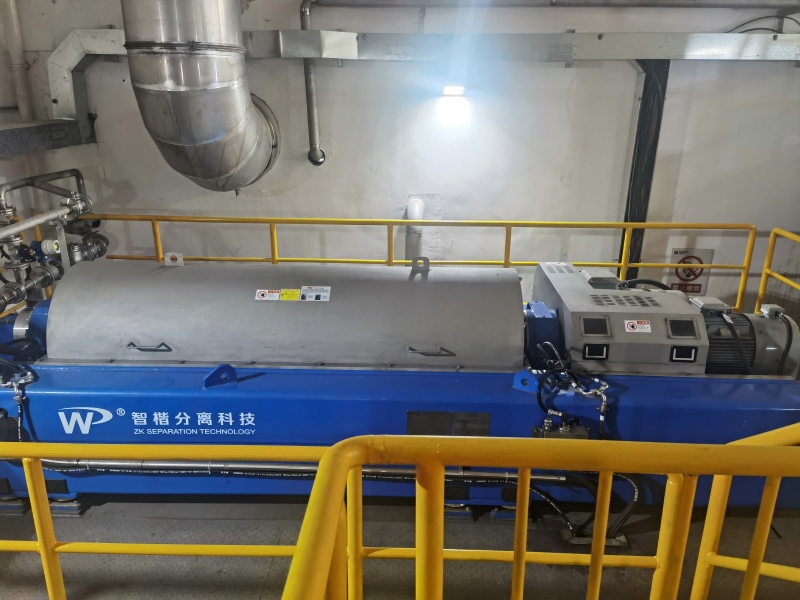
The facility installed an LWS580×2400CX three-phase decanter centrifuge in the separation section of the food waste treatment process. The three-phase design separates the oil phase, water phase, and solid phase simultaneously from the heated slurry feed.
Process Role
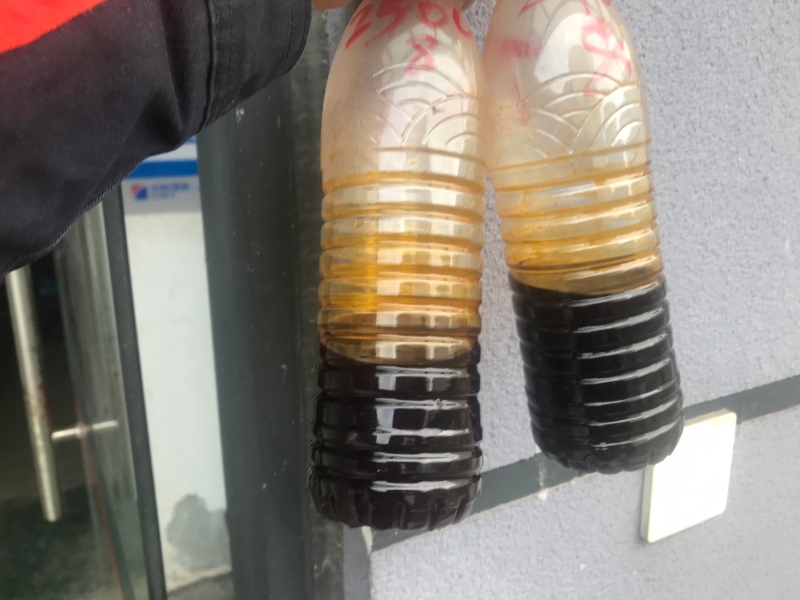
The three-phase decanter centrifuge is positioned after the sand and debris removal stage. The heated slurry (≥70°C) is fed to the unit at 10-15 m³/h. The centrifuge separates the three phases: the oil phase is discharged from the heavy liquid phase outlet for recovery, the water phase is discharged from the light liquid phase outlet, and the solid phase is discharged from the conveyor end.
Equipment Configuration
-
Three-Phase Separation Design
The LWS580×2400CX uses dual weir plates to separately discharge the heavy liquid phase (oil) and light liquid phase (water), while the scroll conveyor discharges solids at the opposite end. The weir plate positions can be adjusted to optimize separation based on feed characteristics.
-
Process Integration
The centrifuge discharge water enters a recirculation water tank. Overflow from the tank is used for anaerobic fermentation, while non-overflow water was originally recirculated for pulping. Process optimization identified that avoiding recirculated water for pulping improves separation quality by reducing oil content in the water phase.
-
Control and Monitoring
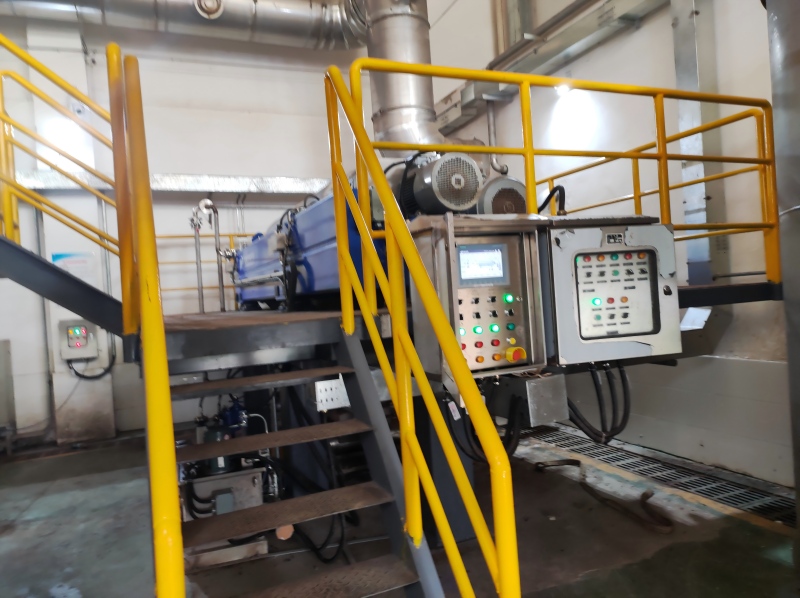
PLC-based control system allows operators to adjust bowl speed, differential speed, and weir plate positions to optimize separation performance when feed solid content varies between 0-18%.
Project Overview
- Customer Industry Environmental Technology
- Application Used Cooking Oil Recovery
- Material Source Food Waste (Collected)
- Equipment Model LWS580×2400CX
- Number of Units 1
- Daily Processing Capacity 200 t/d
- Feed Rate 10-15 m³/h
- Feed Temperature ≥70°C
- Feed Solid Content 0-18%
- Separation Type Three-Phase
Installation and Operation
The LWS580×2400CX three-phase decanter centrifuge is installed in the food waste treatment facility. The unit operates continuously, processing the heated slurry to separate oil, water, and solids.
Performance & Results
- Processing Capacity: Feed rate maintained at 15 m³/h during normal operation, with capability to handle 10-15 m³/h range
- Separation Quality: Oil phase water content ≤3%, water phase oil content ≤0.5%, meeting technical agreement requirements
- Solid Phase Quality: Solid phase moisture content ≤75-80%
- Operating Parameters: Bowl speed 2350 rpm, main motor current 50 A, differential motor current 14 A at 15 m³/h feed rate
- Project Acceptance: Project passed acceptance testing with both water oil content and oil water content meeting technical agreement specifications
- Process Optimization: Identified that avoiding recirculated water for pulping reduces oil content in water phase and improves overall separation stability
- Continuous Operation: Equipment supports 24-hour continuous operation or intermittent operation (with appropriate liquid addition during intermittent periods)
- Separation Stability: Three-phase separation maintains consistent performance despite feed solid content variations between 0-18%
LWS580×2400CX Three-Phase Decanter Features
Three-Phase Separation
The LWS series three-phase design separates oil, water, and solids simultaneously. Dual weir plates allow independent adjustment of oil and water discharge positions to optimize recovery based on feed characteristics and temperature conditions.
Wear Resistance
The equipment handles food waste containing foreign objects and abrasive particles. Wear-resistant materials and protective features extend component life in this demanding application environment.
Operational Control
Variable differential speed control and adjustable weir plates allow operators to adjust separation parameters when feed composition changes. This helps maintain consistent performance when processing food waste with varying solid content (0-18%).
Continuous Operation
The decanter centrifuge operates continuously, matching the facility's requirement for 24-hour processing. The design supports both continuous operation and intermittent operation modes as needed.