
Who We Are
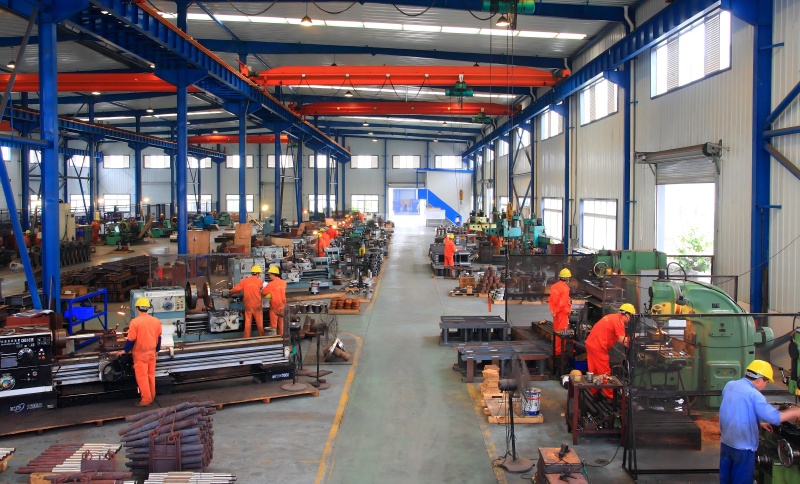
ZK SEPARATION is a centrifuge production facility in Chengdu, China. Our 65,000m² workshop houses centrifugal casting equipment, precision machining centers, dynamic balancing machines, and assembly lines. We employ 200+ people, including 30+ engineers focused on design and process optimization, and 12 quality inspectors who check components at each production stage.
Our centrifuges have been delivered to customers in over 30 countries. Production volume runs around 400 units per year across various bowl sizes and configurations. We maintain stock of common wear parts and can manufacture units with bowl diameters from 250mm to 1000mm based on customer requirements.
We implement 6S management (SEIRI, SEITON, SEISO, SEIKETSU, SHITSUKE, SECURITY) across our production floor to maintain clean, safe working conditions and ensure consistent manufacturing quality. This methodology helps us keep production elements—people, machines, and materials—in optimal condition throughout the manufacturing process.
These capabilities make ZK SEPARATION a reliable OEM centrifuge manufacturer for global industrial partners.
How We Manufacture
Each centrifuge moves through our production line in stages. Bowls are manufactured using centrifugal casting for one-piece construction, which provides superior strength and eliminates weld seams. After casting, we perform precision finishing on CNC lathes. Screw conveyors are machined from solid bar stock. The rotor assembly gets balanced to ISO 21940-11 G2.5 or G6.3 grade, depending on the operating speed. Final assembly includes the gearbox, motors, and control cabinet, then the complete unit runs on our test stand before it leaves the facility.
This integrated process ensures precision, consistency, and performance for every decanter centrifuge we deliver.
Production Flow
Material Preparation
Stainless steel and duplex alloys sourced from qualified mills, with material certificates tracked by heat number
Centrifugal Casting
Bowls manufactured using centrifugal casting technology for seamless, one-piece construction with superior mechanical properties
Precision Machining
Cast bowls finish-machined on CNC lathes; screw conveyors machined from solid bar; bearing housings and flanges on machining centers
Dynamic Balancing
Two-plane balancing of bowl and screw assemblies to minimize vibration at operating speed
Assembly
Installation of bearings, gearbox, motors, and hydraulic or pneumatic systems as specified
Testing & QC
Functional test on water or customer-supplied material; vibration and torque checks before packaging
In-House Production Capabilities
Centrifugal Casting
Bowls up to 1000mm diameter are produced using centrifugal casting, creating seamless one-piece construction without weld joints. This process delivers superior mechanical strength, uniform material properties, and extended service life compared to welded bowls.
Precision Machining
Cast bowls receive finish machining on CNC lathes up to 4000mm length. Screw conveyors are machined from solid bar stock in one setup to maintain pitch accuracy, then hard-faced or ceramic-tiled based on application.
Dynamic Balancing
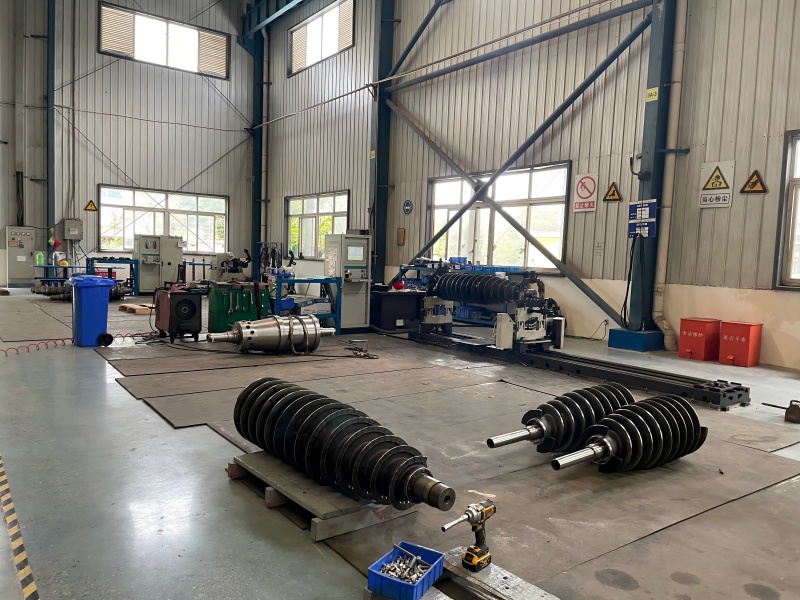
Our balancing machines handle rotors up to 5 tons. We balance to ISO 21940-11 standards (G2.5 or G6.3 grade), with tighter tolerances available for high-speed models or customer specifications.
Assembly & Testing
Final assembly takes place in a dedicated bay where motors, gearboxes, and control systems are integrated. Each unit runs on our test stand with torque and vibration monitoring.
Engineering & Technologies
Our engineering team works on designs that address specific process challenges. We don't develop new separation principles—we adjust proven centrifuge technology to fit different materials, throughput requirements, and operating environments. View our standard decanter centrifuge product range to understand our core technology foundation.
Differential Speed Control
We offer hydraulic or gearbox-based differential control. Hydraulic systems give variable differential adjustment during operation, useful when feed properties change. Fixed-ratio gearboxes are simpler and work well for consistent materials. Your choice depends on how much process variability you expect.
Adjustable Liquid Depth
Weir plates or adjustable dam rings set the liquid pool depth inside the bowl. We can provide quick-change weir designs if you need to adjust the pool depth between batches or switch between different materials on the same centrifuge.
Wear Protection
Screw tips and discharge ports see the most wear. We use tungsten carbide tiles or ceramic inserts in these areas. Material choice depends on particle hardness and abrasiveness—carbide for most applications, ceramic for highly abrasive slurries. We offer three discharge outlet designs: vortex-type for higher throughput and reduced cake breakup, square carbide for easy maintenance, and ceramic wear-resistant sleeves for food and pharma applications.
BD Board Technology
For sludge dewatering applications, we can integrate BD (Baffle Disc) board technology. This improves cake dryness, increases solid recovery rates, and often allows operation at lower speeds—which reduces power consumption and polymer dosage. The BD plates create a longer residence path inside the bowl without extending overall machine length.
Sanitary Design for Food & Pharma
Food-grade units use 316L stainless steel with electropolished interior surfaces. Tri-clamp connections allow tool-free disassembly. We design the bowl and screw to drain completely, which helps with CIP (clean-in-place) procedures.
Automation & Remote Monitoring
Standard control cabinets include a PLC with a touchscreen HMI. We can add remote monitoring via Ethernet or 4G if you want to track centrifuge performance from a central control room. Data logging for torque, speed, and vibration is available.
Energy Efficiency
VFD-controlled main motors let you adjust bowl speed to match the separation requirement, which can reduce power draw when running easier materials. We size motors based on your actual process load, not worst-case scenarios, to avoid oversized drives.
Certifications & Testing
We maintain certifications that cover manufacturing quality systems and product safety. Equipment exported to different regions carries the appropriate marks—CE for Europe, EAC for Eurasian markets, and we work with third-party inspection agencies like SGS or Bureau Veritas when customers require witnessed testing.
- ISO 9001 - Quality Management System certification for manufacturing processes
- ISO 14001 - Environmental Management System compliance
- ISO 45001 - Occupational Health and Safety Management System
- CE - European Conformity marking for equipment sold in Europe
- EAC - Eurasian Conformity certification for CIS markets
- SGS / Bureau Veritas - Third-party inspection and verification available
Testing Capabilities
- Material composition verification by spectrometer (PMI testing)
- Dimensional inspection with CMM for critical tolerances
- Hydrostatic pressure testing of bowls before assembly
- Dynamic balancing to ISO 21940-11 G2.5 or G6.3 grade, or customer specification
- Functional testing on water or customer-supplied samples
- Vibration analysis during test runs
- Torque and power measurement under load
- Third-party inspection coordination (SGS, Bureau Veritas)
We keep test records for traceability and can provide documentation packages for customers who need manufacturing records as part of their equipment files.
OEM/ODM Cooperation Model
Our OEM process starts with understanding your requirements—processing capacity, material characteristics, space constraints, and any regulatory requirements that apply to your market. From there, we move through design, prototyping if needed, production, quality control, and delivery. Our standard decanter centrifuge models serve as the foundation for custom modifications and specialized applications.
Cooperation Process
Inquiry & Requirements
Share your material data, target throughput, and any special requirements (materials of construction, certifications, footprint limits). We'll need details on particle size, density, viscosity if available.
Design & Engineering
Our engineers select the bowl size, calculate G-force and residence time, and propose motor and drive configurations. We provide GA drawings and technical specs for your review.
Prototype or Sample Testing
For new applications, we can run trials on our pilot centrifuge or build a prototype if the order volume justifies it. This step confirms separation performance before committing to production.
Production
Manufacturing lead time runs 8-10 weeks for standard configurations, longer for custom sizes or materials. We provide progress updates at key milestones (machining complete, assembly start, testing).
Quality Control & Testing
Each unit goes through dimensional checks, balancing verification, and a functional test. Customers are welcome to witness testing or we can arrange third-party inspection.
Delivery & Support
We handle export packaging, documentation, and shipping arrangements. Post-delivery, we provide commissioning support remotely or on-site depending on the agreement.
Customization Options
Ready to discuss your OEM project?
Send us your requirements and we'll get back to you with a technical proposal and timeline.
Start Your OEM ProjectWhy Choose ZK SEPARATION as Your OEM Partner
Working with an OEM centrifuge supplier comes down to a few practical factors: manufacturing capability, quality consistency, communication during the project, and support after delivery. Here's what we bring to an OEM partnership.
In-house Manufacturing
We control the production process from machining to final assembly. This means we can adjust designs, handle custom requests, and maintain quality standards without depending on subcontractors for critical components.
Proven QC Process
Our quality inspectors check components at each stage—material verification, in-process dimensional checks, balancing validation, and final testing. We maintain records for traceability and can provide test reports with each shipment.
OEM Customization Experience
We've built centrifuges for distributors, integrators, and end users across different industries. Customizations range from simple motor voltage changes to complete redesigns for specific materials or certifications.
Global Service Network
We stock common wear parts and can ship replacements within a few days. For commissioning or troubleshooting, our technicians can travel to your site or provide remote support via video and phone.
Engineering Support
Our engineers are available during the design phase to review process data, suggest configurations, and provide performance calculations. We stay involved through production to handle any design changes that come up.
Reliable Delivery
We track production schedules and communicate status updates at agreed milestones. Lead times vary by complexity, but we commit to a delivery window at the order stage and work to meet it.
Project Performance Examples
Below are results from recent installations where our centrifuges addressed specific process challenges. These numbers come from commissioning reports and customer feedback during the first months of operation.
Municipal Sludge Dewatering
Australia - Wastewater Treatment Plant
- Dry Solids: Increased from 18% to 24%
- Polymer Dosage: Reduced by 15%
- Throughput: 45m³/h continuous operation
Olive Oil Extraction
Italy - Food Processing
- Oil Recovery: 95-96% extraction efficiency
- Water Consumption: Reduced by 30%
- Production Capacity: 8 tons/hour
Chemical Intermediate Separation
Malaysia - Chemical Plant
- Purity: Meets product specification consistently
- Downtime: Less than 5% over 8 months
- Maintenance: Scheduled parts replacement only
Coal Tar Processing
China - Coal Chemical Industry
- Tar Recovery: 95% separation efficiency
- Cake Dryness: 30-40% dry solids content
- Payback Period: 14 months based on material recovery
Starch Dewatering
Thailand - Starch Processing
- Starch Recovery: Over 99%
- Final Moisture: 38-40% in cake
- Energy Use: 25% lower than previous equipment
Pharmaceutical Fermentation
India - Pharmaceutical Manufacturing
- Product Loss: Below 0.5% in discharge
- CIP Time: 45 minutes per cleaning cycle
- Batch Consistency: Meets validation requirements
Frequently Asked Questions
What is your minimum order quantity for OEM projects?
We don't have a strict MOQ for OEM work. Single units are feasible for custom projects, especially if the design can be reused for future orders. For volume pricing, we typically see better economics starting around 3-5 units per year. If you need a one-off custom centrifuge, we can still accommodate that—it just won't have volume discounts applied.
Can you provide sample testing before committing to production?
Yes. We have pilot-scale equipment at our facility and can run separation tests on your material samples. This helps confirm the bowl size, G-force, and differential settings before we finalize the design. Sample testing usually takes 1-2 weeks depending on scheduling. If your application is highly specialized, we may recommend building a prototype unit instead.
What is the typical lead time for custom OEM centrifuges?
Standard configurations (existing bowl sizes with minor modifications) typically ship in 8-10 weeks. Custom bowl sizes, special materials like Hastelloy, or certifications such as ATEX can extend that to 12-16 weeks. Long-lead items like explosion-proof motors or third-party certification reviews are usually the bottleneck. We provide a detailed schedule after reviewing your specifications.
Do you offer technical support after delivery?
We provide commissioning assistance—either remote or on-site—to get the centrifuge running correctly in your process. After that, we're available for troubleshooting, performance optimization, and scheduled maintenance planning. Spare parts are stocked for common wear items like screw tips, bearings, and seals. For more complex issues, our engineers can visit your site or work with you remotely via video support.
What documentation do you provide with each centrifuge?
Standard delivery includes operation and maintenance manuals, electrical schematics, spare parts lists, and test reports (balancing, hydrostatic, functional testing). For customers who need more extensive documentation—such as material certificates, casting process records, or FAT reports—we can provide those as part of the project scope. If you're building an equipment file for regulatory submission, let us know what documents you need and we'll include them.
Can you manufacture centrifuges to meet specific industry certifications?
We have experience with several certification standards. CE marking is standard for units going to Europe. ATEX certification for explosive atmospheres takes additional time and engineering review. Food-grade centrifuges can be built to 3A sanitary standards if needed. Pressure vessel codes (ASME Section VIII, PED) apply if the bowl is classified as a pressure vessel in your jurisdiction—we've handled those before, but it requires third-party inspection and adds to the lead time.
How do you handle intellectual property for custom designs?
If you provide a proprietary design or process specification, we sign NDAs to protect that information. For designs we develop based on your requirements, we typically retain the manufacturing rights but won't supply the same configuration to your direct competitors without your approval. If you need exclusive rights to a custom design, that can be negotiated as part of the project terms.