

Choose 2-phase for cake and one centrate
A 2-phase decanter discharges cake and one liquid. Use it for sludge dewatering, slurry thickening and single-liquid clarification.
2-phase series →Specify a 3-phase decanter when the feed contains solids plus two immiscible liquids of different density, typically oil and water. ZK builds the LWS series with separate light-phase, heavy-phase and solids outlets. Differential speed, pond depth, weir, paring-disc or impeller arrangement, scroll design, seals and wetted materials are selected from the required oil and water quality, emulsion stability, solids load, and hygiene or hazardous-area requirements.

The bowl has three outlets: light phase (oil), heavy phase (water) and solids. Each stream leaves the machine separately.
Weir discs (dam plates) set pond depth and the oil-water interface. Selected machines add a paring disc or impeller to discharge one liquid phase under pressure.
Food-grade, corrosion-resistant and explosion-proof builds are available for edible oil, waste oil, oily sludge and chemical recovery.
VFD, PLC and HMI control of bowl speed, differential speed, torque and vibration supports continuous duty.
Feed enters the rotating bowl through a stationary feed tube. Depending on the material, pretreatment may include heating, dilution, demulsification or pH adjustment. Polymer is used when the solids need flocculation.
Under centrifugal force, solids compact against the bowl wall, the heavy phase forms the outer liquid layer, and the light phase remains closer to the bowl axis.
The scroll conveyor moves compacted solids up the beach to the solids discharge ports. The two liquid phases flow toward their separate outlets at the liquid end.
The light phase, heavy phase and solids leave through separate discharge paths. Bowl geometry and formulas are on How a Decanter Centrifuge Works.
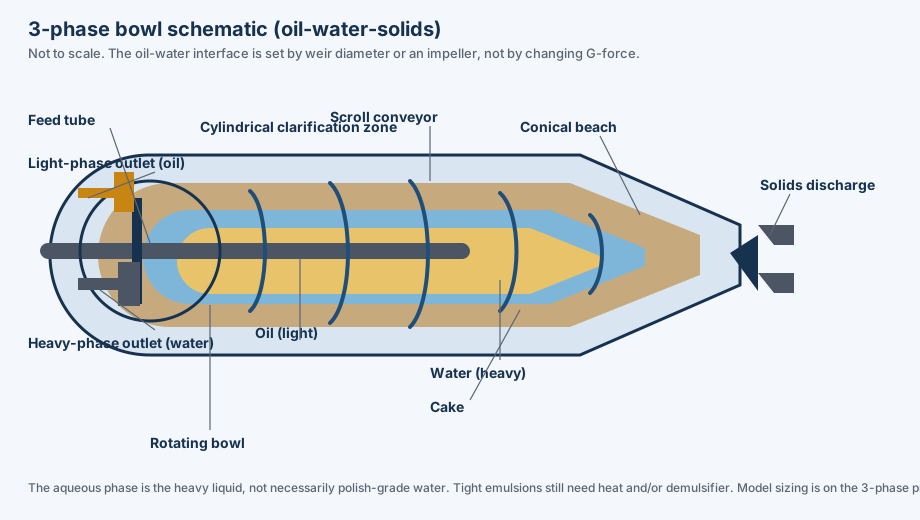
Inside the bowl the phases form concentric layers: solids at the wall, the heavy liquid outside the light liquid. Pond depth and the oil-water interface are set with weir discs (dam plates). Selected machines add a paring disc or impeller on one liquid outlet for pressurized discharge. Weir rings are changed with the bowl stopped.
Weir diameter sets pond depth and the light-phase / heavy-phase interface. A new oil-water ratio or density split is followed by changing the weir rings at a short stop, not at operating speed.
Selected LWS machines use a paring disc or impeller to discharge one liquid phase under pressure. The heavy phase is the aqueous layer. It is not polish-grade water unless a downstream polisher is specified.
Light phase, heavy phase and solids leave through separate outlets. Residual oil in the water or cake still depends on feed, emulsion, temperature and the weir setting.
Where the oil or water must be polished further, a disc-stack separator is specified downstream of the LWS decanter.
The difference is the liquid discharge: one liquid outlet or two. ZK builds both. Pick the family here; a quotation still needs feed data.
A 2-phase decanter discharges cake and one liquid. Use it for sludge dewatering, slurry thickening and single-liquid clarification.
2-phase series →
A 3-phase decanter discharges light phase, heavy phase and solids in one pass. Use it when oil and water must be taken off separately.
Request a 3-phase recommendation →The density difference between the two liquids must be large enough to form stable layers in the bowl. Stable emulsions still need heating, demulsification or other pretreatment before the centrifuge. Tricanter is a brand name for a three-phase decanter centrifuge; the generic machine type is a 3-phase decanter.
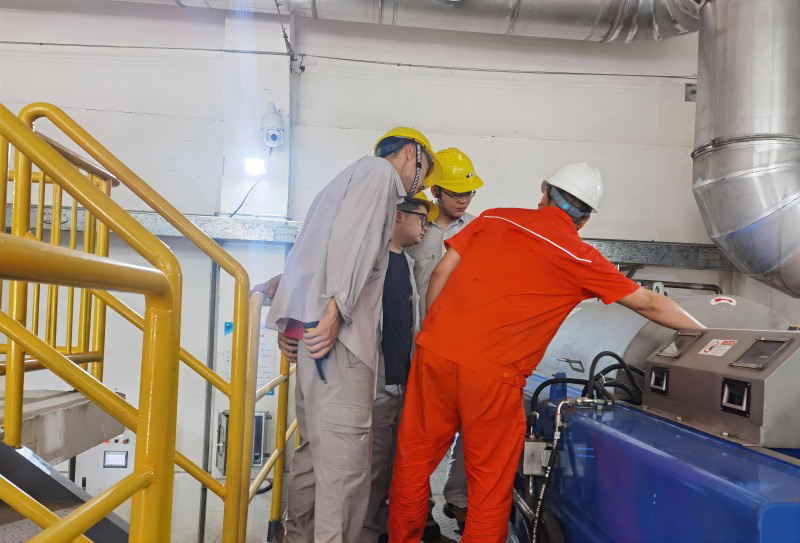
Food-waste slurry and used-cooking-oil streams carry grease, water and organic solids. The LWS bowl discharges oil, water and solids as three streams for recovery and downstream treatment.
Explore Food Waste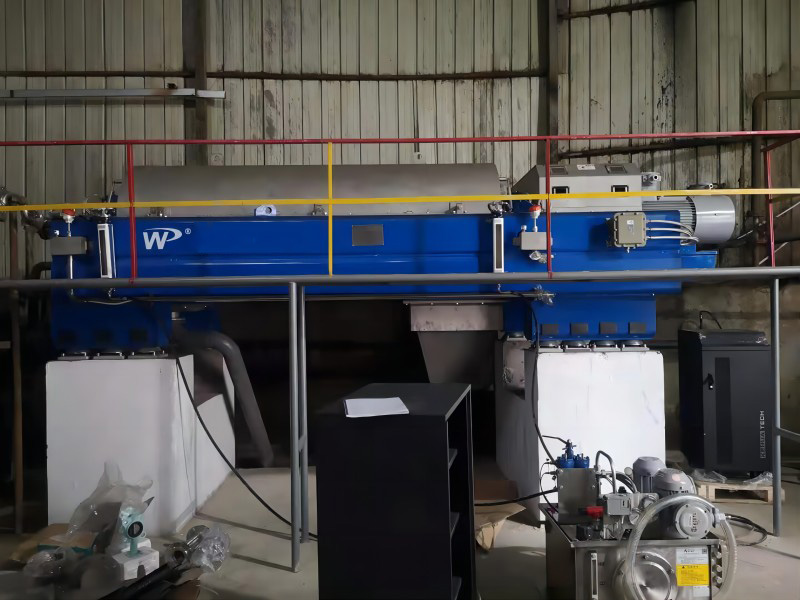
Recover oil, separate water and discharge solids from refinery sludge, tank-bottom sludge and industrial waste oil streams with continuous operation.
View Oil Sludge Centrifuge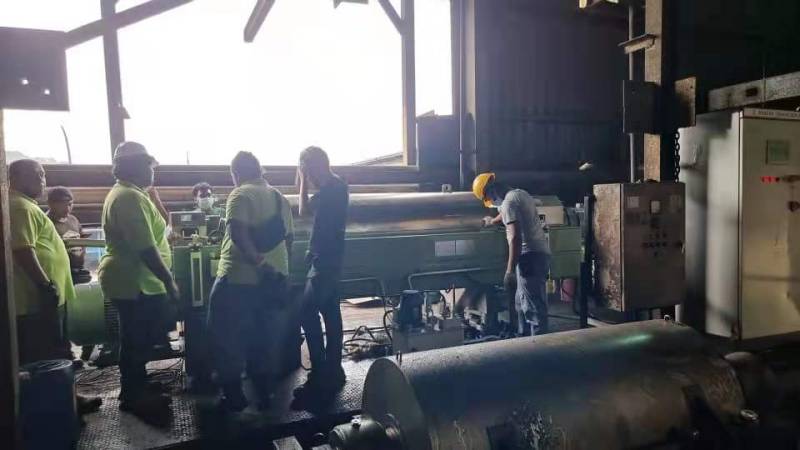
On palm-oil pressed liquor, olive paste and avocado pulp, the 3-phase bowl separates oil, aqueous phase and solids (fibre, pomace or pulp). Mill sizing stays on the dedicated product pages.
View Palm Oil DecanterModel selection uses both volumetric flow and dry-solids load, together with oil-water ratio, emulsion stability, temperature, viscosity and the required oil and water quality. The LWS range covers bowl diameters from 250 mm to 650 mm. Food-grade, corrosion-resistant and explosion-proof builds are available on this series.
| Model | Bowl (mm) | Speed (rpm) | Max G | Main Motor (kW) | Back Drive (kW) | Hydraulic Range (m³/h) | Weight (kg) |
|---|---|---|---|---|---|---|---|
| LWS250x1025C(X) | 250 | 5000 | 3500 | 11 | 4 | 1 | 1400 |
| LWS350x1435C(X) | 350 | 4000 | 3136 | 22 | 5.5 | 3–5 | 2750 |
| LWS450x1845C(X) | 450 | 3500 | 3087 | 30 | 11 | 6–12 | 4000 |
| LWS520x2150C(X) | 520 | 3200 | 2982 | 45 | 15 | 10–15 | 6300 |
| LWS580x2400C(X) | 580 | 3000 | 2948 | 55–75 | 18.5 | 15–20 | 7550 |
| LWS650x2600C(X) | 650 | 2800 | 2854 | 75–90 | 22 | 20–30 | 11000 |
Selected installations show how LWS bowl size and discharge arrangement are matched to oil-water-solid feed. Open a project for the confirmed model and duty.
Food-waste slurry contains grease, water and organic solids. ZK LWS three-phase decanters discharge the oil phase, the water phase and solids in one continuous process for recovery and downstream treatment.
View Installation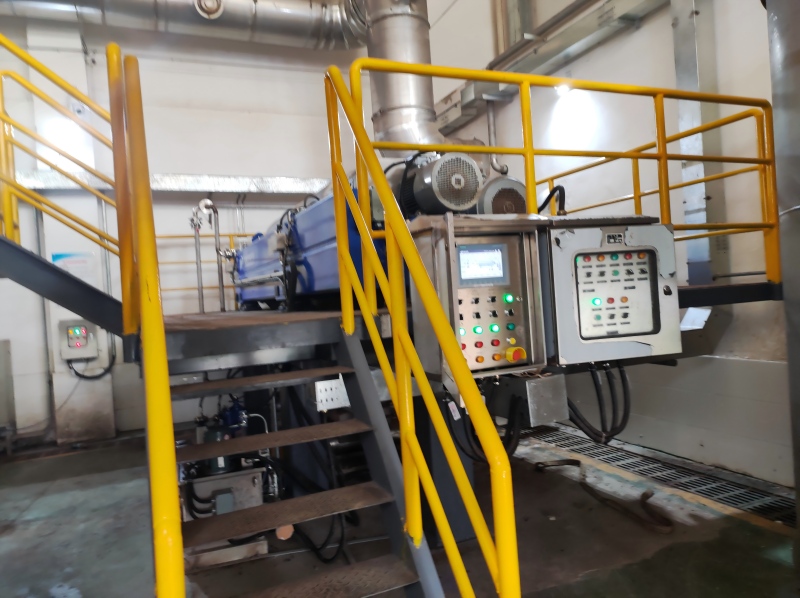
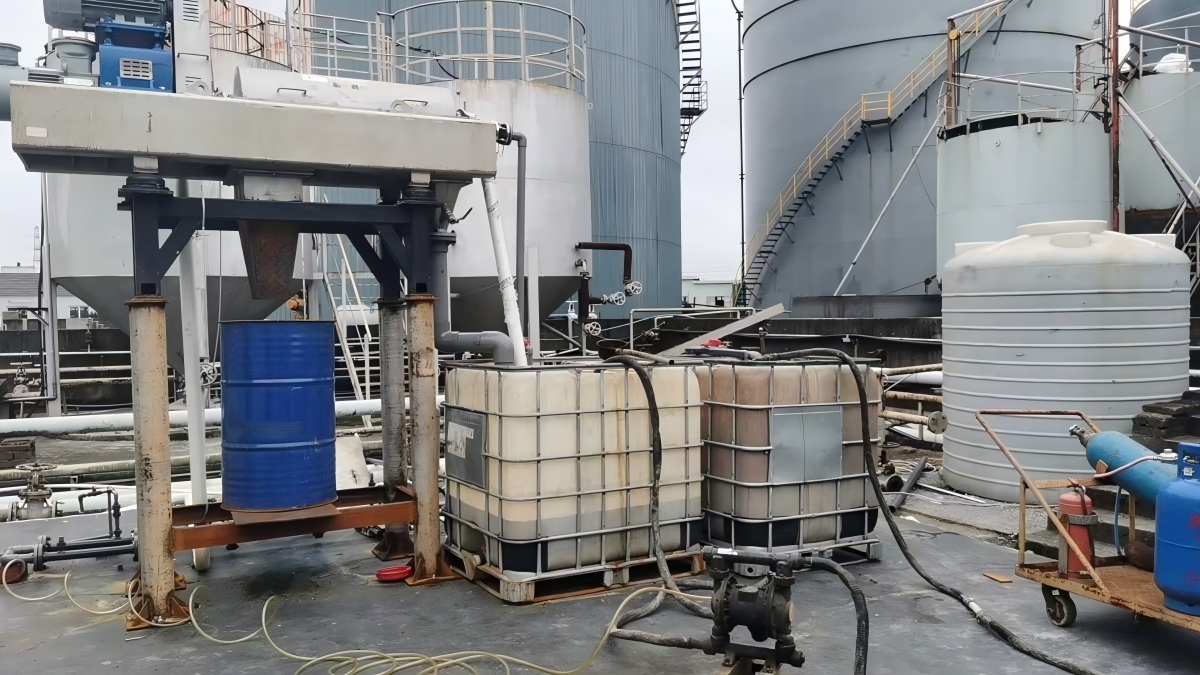
For tank-bottom sludge, a three-phase decanter separates recovered oil, aqueous phase and solid residue in one continuous process.
View InstallationSend feed material, oil-water-solids split, temperature and feed rate. ZK will specify the bowl and liquid-discharge arrangement.
These answers help determine whether an LWS 3-phase decanter is the right machine, or whether a 2-phase bowl or a disc-stack separator is specified instead.
It separates a feed mixture into light phase, heavy phase and solids. In many applications this means oil, water and solid residue.
A 2-phase decanter separates solids and one liquid. A 3-phase decanter separates solids plus two liquid phases, making it suitable for oil-water-solid recovery.
It can handle many oil-water-solid mixtures. Stable emulsions need heating, demulsification or other pretreatment before the centrifuge. ZK evaluates the feed before final model selection.
No. A 3-phase decanter is a horizontal solid-bowl machine for feeds that carry a significant solids load plus two liquids. A 3-phase disc-stack separator is used for lower-solids polishing of two liquids. Many oil-recovery lines use the LWS decanter first and a disc-stack machine only if the oil or water must be polished further.