
Olive Oil Decanter for Commercial Mills
ZK SEPARATION supplies an olive mill extraction line from fruit reception to oil purification. The core machine is an LWS-series horizontal decanter that takes malaxed paste continuously. Two-phase or three-phase operation is set by liquid-outlet arrangement and whether dilution water is added—not by a different “centrifuge type.” Malaxation is commonly held around 22–27°C when the mill wants cold extraction; that temperature is a process setpoint, not a grade claim. Extra virgin is decided by chemistry and taste panel, not by the jacket temperature alone. For the mill workflow from reception to purification, see the olive oil extraction process.
Malaxation 22–27°C
Jacketed malaxers hold paste in the temperature range mills use for cold extraction (typically not above 27°C). This is a process setting on the malaxer, not a unique decanter feature.
2-phase and 3-phase operation
Two-phase operation discharges an oil-rich liquid and wet pomace with little or no dilution water. Three-phase operation adds process water as required and discharges oil, vegetation water and pomace.
Mill extraction line
Reception, washing, crushing, malaxation, decanter, optional screening and vertical disc-stack purification can be supplied as one food-grade line.
Where the decanter sits in the mill
The olive oil decanter is fed after crushing and malaxation. Leaf load, stones and wash water upstream, and the vertical separator downstream, decide wear, plugging risk and how much work is left for oil purification.
Fruit reception and cleaning
Olives are lifted from the receiving pit. A defoliator (air classification) removes leaves and light twigs, then the fruit is washed so soil and stones do not enter the crusher or the decanter feed zone.
Crushing and malaxation
A hammer crusher breaks flesh and pits; interchangeable screens set paste particle size. The malaxer mixes the paste, commonly 20–30 minutes at about 22–27°C for cold extraction, so oil droplets coalesce before the decanter.
Decanter paste separation
Malaxed paste is pumped into the horizontal bowl. Two-phase operation discharges an oil-rich liquid and wet pomace. Three-phase operation discharges oil, vegetation water and pomace. The oil phase still goes to a vertical separator; it is not finished oil.
Oil purification
A vertical disc-stack separator (purifier) takes residual water and fine solids out of the oil phase before storage. It is not a substitute for the decanter and does not take whole paste.
Two-Phase vs Three-Phase Olive Oil Decanter
Mills choose the process from fruit moisture, vegetation-water discharge rules and pomace handling (including destoning or second extraction). Oil left in pomace depends on variety, ripeness, malaxation and bowl setpoints. It is not a catalog percentage. LWS is ZK’s published olive-duty decanter series; two-phase or three-phase liquid discharge is specified with the mill flowsheet.
| Item | Two-phase operation | Three-phase operation |
|---|---|---|
| Dilution water | Little or no process water added to the paste | Process water added as required to fluidize the paste |
| Decanter outlets | Oil-rich liquid and wet pomace | Oil, vegetation water and pomace |
| Vegetation water | Stays in the wet pomace | Discharged as a separate liquid phase after screening |
| Typical mill reason | Cut added water and vegetation-water volume | Traditional full split, or a drier pomace stream for handling |
| Related machine page | 2-phase decanter centrifuge | 3-phase decanter centrifuge |

2-phase paste separation
Little or no dilution water is added. Vegetation water remains in the wet pomace. The oil-rich liquid still needs screening and a vertical separator before storage.

3-phase oil / water / pomace
Process water is added as needed. The bowl discharges oil, vegetation water and pomace as separate streams. Used where the mill wants a distinct water phase or drier pomace.

CIP and PLC
Cleaning-in-place and PLC control support hygienic changeover between grower lots and at the end of a campaign shift. Voltage and frequency follow the mill supply.
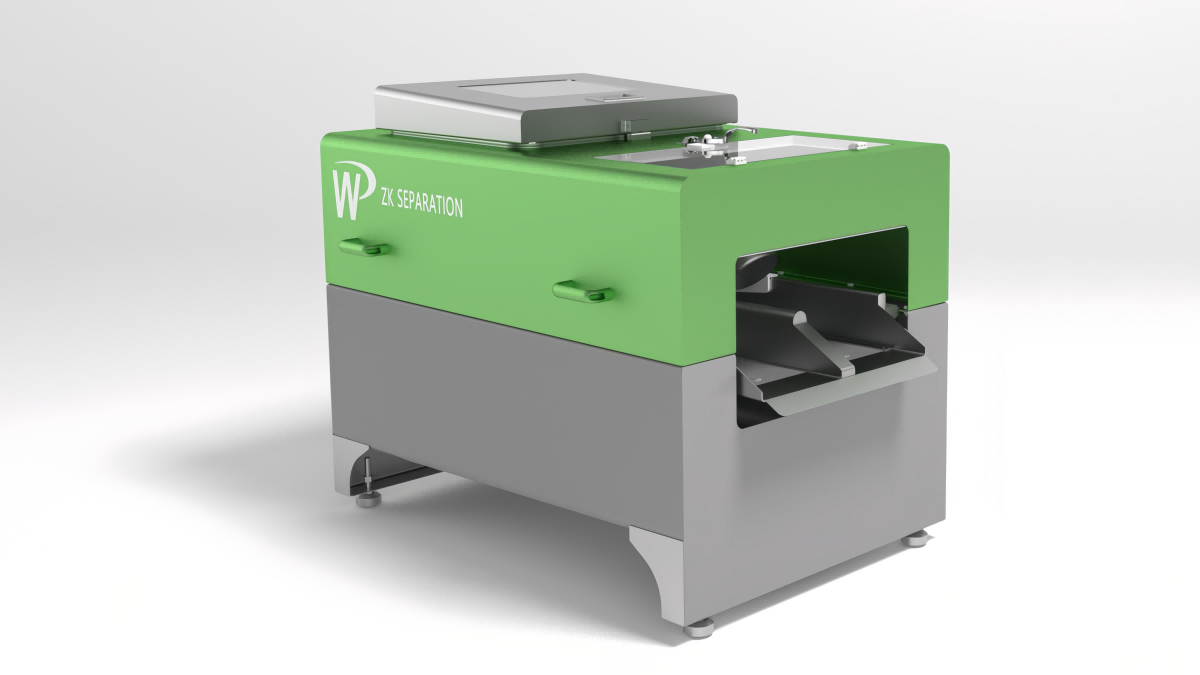
Screening before the separator
On this line, a vibrating screen knocks coarse pomace out of the liquid from the decanter so the disc-stack separator sees a lower solids load. Not every mill uses a screen at this point.
Other equipment on the extraction line
Around the LWS decanter, the mill line is modular stainless-steel equipment. Stages can be quoted with the decanter or as a complete extraction plant.
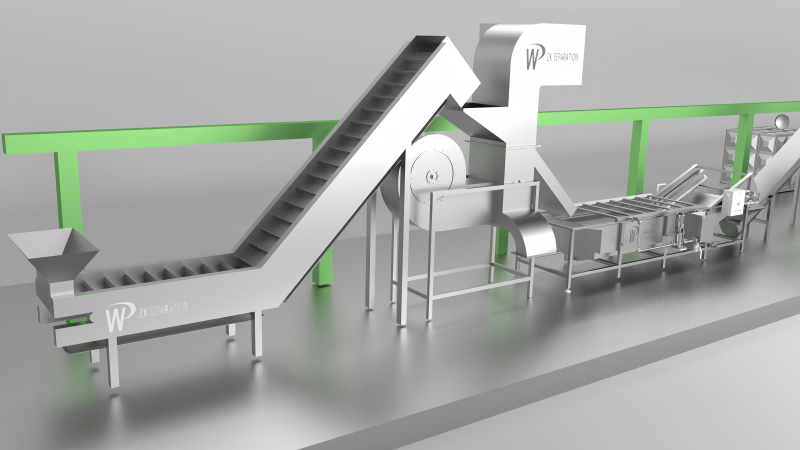
Receiving elevator (scraper)
Inclined conveyor that lifts harvested olives from the receiving pit to cleaning. Food-grade stainless frame with a chain-driven scraper in an enclosed housing.
- Inclined transport from receiving pit to washer
- Chain and scraper assembly with enclosed housing
- Corrosion-resistant frame for wash-down
Defoliator (leaf remover)
Installed after the elevator. Adjustable air flow removes leaves, light twigs and dust before washing and crushing.
- Air speed adjustable for harvest conditions
- Separates light non-fruit material
- Reduces leaf load on the crusher and decanter
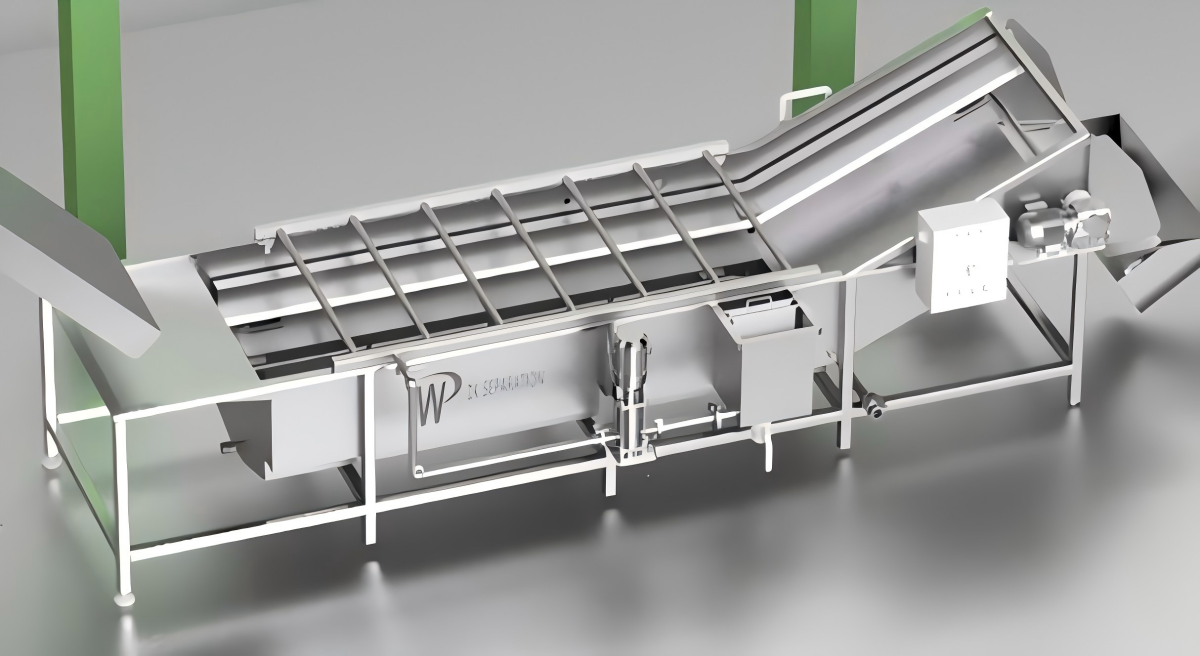
Multi-stage fruit washer
Turbulent water, bubble jets and spray wash the fruit. Filtered wash water can be recirculated to cut fresh-water use.
- Bubble and spray-assisted cleaning
- Filtered recirculation of wash water
- Stainless-steel wet section

Olive crusher
High-speed hammers break flesh and pits of the whole fruit. Paste leaves through interchangeable screens so particle size can be set before malaxation.
- Hammer crusher for whole olives
- Replaceable screens for paste size
- Enclosed casing and duty-rated motor

Malaxer with jacket heating
Four mixing sections with thermal jackets and temperature probes hold paste, typically 22–27°C for cold extraction. Pneumatic valves time discharge to the feed pump on this batch-train design.
- Four stainless mixing tanks in series
- Jacketed heating with temperature control
- Inspection glass and timed discharge
Screen ahead of the separator
Removes coarse pomace from the oil or oil-and-water stream before the disc-stack separator. Specified on this packaged line; some mills send decanter oil to a buffer tank instead.
- Motor-driven screen deck
- Spring-mounted damping
- Pump outlet for continuous transfer
LWS olive-duty decanter specifications
Published figures are bowl diameter, maximum bowl speed, G-force, main motor and outline dimensions. Mill capacity is discussed in tonnes of olives per hour, then checked against paste moisture and malaxation. This table does not list a guaranteed olive t/h. Share fruit t/h and campaign hours so engineers can match a bowl. Back-drive motor and installed power are confirmed on the data sheet for the selected machine.
| Model | Bowl Diameter | Max. bowl speed (rpm) | G-force (× g) | Main motor (kW) | Dimensions (mm) |
|---|---|---|---|---|---|
| LWS350 | 350mm | 4000 | 3180 | 22 | 3600 × 1280 × 1050 |
| LWS450 | 450mm | 3400 | 2913 | 30 | 4000 × 1735 × 1350 |
| LWS520 | 520mm | 3200 | 2981 | 45 | 4800 × 1890 × 1300 |
| LWS580 | 580mm | 3000 | 2923 | 55 | 5280 × 1705 × 1240 |
| LWS650 | 650mm | 2800 | 2853 | 75 | 5420 × 1865 × 1300 |
Note: PLC control is standard. Voltage, frequency and safety devices follow the mill supply. Bowl speed, differential speed and pond/interface settings are commissioned on paste. The kW column is the published main motor; scroll drive is separate. This table does not publish a guaranteed olive t/h or oil recovery figure.
Applications for Olive Mill Buyers
Commercial olive mills
Continuous campaign duty for industrial almazaras and frantoi that need a specified LWS bowl, two-phase or three-phase outlets, and CIP between lots.
Estate olive farms
Smaller LWS350 / LWS450 bowls for estate cold-extraction lines where fruit is processed close to picking and daily input is limited.
Food processing plants
Food-grade contact materials and hygienic layout for plants that run olives as a dedicated line. The vertical separator is specified separately from the decanter.
Cooperative processing centers
Modular reception-to-purification layout for shared mills that change grower lots during the campaign. Phase operation and CIP are set per lot notes.
Italian olive mill shipment
A repeat mill customer in Italy took one LWS350 and one LWS450 three-phase olive oil decanter centrifuge. Both machines were built with food-grade wet parts and CIP.
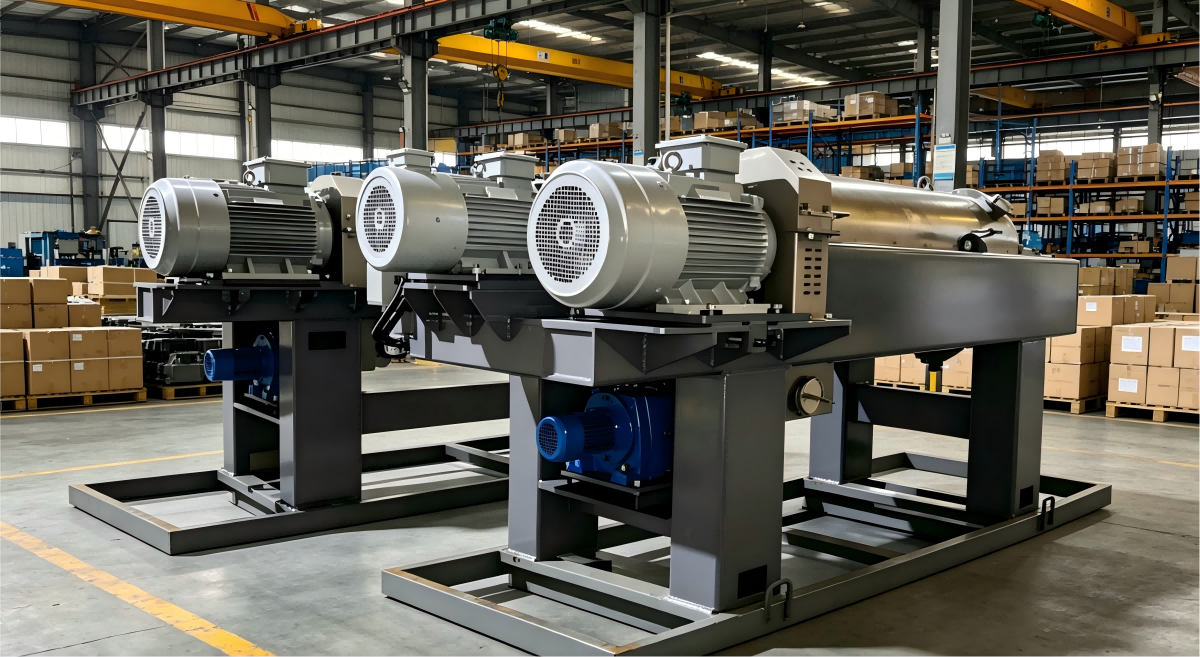
Project support for olive oil centrifuges
Food-grade decanter engineering
LWS bowls for olive paste, wear protection on the scroll and solids discharge, and layout drawings that fit an existing mill hall or a new line.
ISO 9001 and CE manufacture
Systems are built under ISO 9001 with CE marking where applicable, using food-contact stainless steel on wet parts.
Sized from mill data
Model selection uses tonnes of olives per hour, two-phase or three-phase preference, campaign months and destination voltage. Bowl diameter in the table runs from 350 mm to 650 mm.
Commissioning and spare parts
Installation supervision, operator training and spare-parts supply are scoped per project. Campaign service windows should be stated in the inquiry.
Olive mill decanter FAQ
ZK LWS machines are horizontal decanters for commercial mills and estate plants (almazaras / frantoi). They take malaxed paste with two-phase or three-phase outlets. Kitchen oil dispensers, laboratory benchtop centrifuges and settling vats are different equipment.
The LWS decanter takes malaxed paste and separates an oil-rich liquid from pomace (and vegetation water in three-phase operation). A vertical disc-stack separator purifies the oil phase afterward. Most mills use both; the separator does not take whole paste.
Two-phase operation uses little or no dilution water and discharges an oil-rich liquid plus wet pomace. Three-phase operation adds process water as needed and discharges oil, vegetation water and pomace. See the comparison table. The choice follows effluent rules and pomace handling, not a catalog yield figure.
It is the usual malaxation temperature range for cold extraction (mills commonly keep paste at or below 27°C). The malaxer jackets hold that setpoint before paste enters the decanter. Extra virgin is a quality grade from analysis and tasting, not a temperature label.
Send tonnes of olives per hour, campaign hours per day, two-phase or three-phase preference, campaign months, destination country and supply voltage/frequency. New line or replacement, and how pomace and vegetation water are handled, help select among LWS350–LWS650.
Request a mill quotation
Send olive t/h, 2-phase or 3-phase preference, and destination country. Engineers will size the bowl from that mill data.