
Is a 2-Phase Decanter Right for Your Process?
A 2-phase decanter is used when the process requires one solids discharge and one liquid discharge. Typical duties include sludge and slurry dewatering, liquid clarification, solids recovery and volume reduction. ZK selects bowl geometry, differential-speed range, pond depth, wetted materials and wear protection from the actual feed and separation target.

Typical Range
Why It Fits Solid-Liquid Separation
Continuous feeding and discharge help plants replace batch settling or filter press steps where stable throughput and reduced operator attendance are required.
Adjustable differential speed and pool depth allow operators to balance cake dryness, centrate clarity and solids recovery when feed concentration changes.
Wear protection such as tungsten carbide tiles, ceramic sleeves and hardened discharge ports extends service life in abrasive sludge and mineral slurry duties.
PLC control, torque monitoring, vibration protection and HMI parameter settings support long-term 24/7 operation for production and maintenance teams.
How a 2-Phase Decanter Works
Feed Distribution
The feed slurry enters through a stationary feed tube and is accelerated inside the rotating bowl. A stable feed zone reduces turbulence before separation begins.
Solid-Liquid Separation
Centrifugal force pushes heavier solids to the bowl wall while the clarified liquid remains closer to the center, forming a separate liquid layer.
Solids Conveying
The scroll conveyor rotates at a controlled differential speed and moves the settled solids toward the conical beach for further drainage.
Two Separate Discharges
Dewatered solids discharge from the solids ports, while clarified liquid exits through adjustable overflow weirs for reuse, discharge or downstream treatment.
Engineering Configuration Options
Drive and Process Control
Variable speed control helps the centrifuge adapt to changes in feed flow, solids concentration and viscosity without frequent mechanical adjustment.
Continuous Dewatering
Effective dewatering reduces sludge or slurry volume, helping reduce transport, storage and disposal costs in continuous production plants.
Process-Specific Materials
Duplex stainless steel, 316L stainless steel, corrosion-resistant coatings and food-contact options can be selected according to process media.
Operation and Maintenance Access
HMI control, fault alarms, lubrication support and accessible wear parts help operators keep the centrifuge running with predictable service intervals.
Applications for 2-Phase Decanters
Wastewater and Sludge Treatment
For municipal sludge, industrial wastewater and paper or food processing effluent, the decanter reduces water content and produces clearer centrate for return or further treatment.
View Sludge Centrifuge
Food and Fermentation Processing
Used for DDGS, starch, juice, food additives and fermentation broth, the centrifuge separates fibrous or suspended solids from valuable liquid streams. Olive paste after malaxation is specified on the olive oil centrifuge page.
View Food Decanter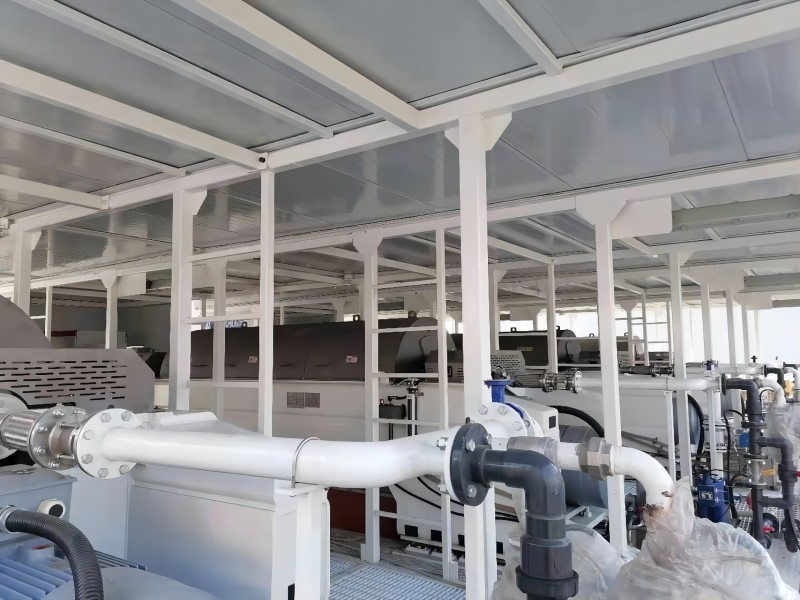
Mining and Construction Slurry
Heavy-duty wear protection supports tunneling mud, sand washing water, tailings and mineral slurry dewatering where abrasive solids are common.
Explore Slurry Applications2-Phase Decanter Models and Specifications
The hydraulic capacity shown covers the standard range across the listed models. Final model selection is based on both volumetric flow and dry-solids load, together with particle size, density difference, viscosity, temperature and the required separation result.
| Model | Speed (rpm) | Max G-Force (× g) | Main Motor (kW) | Back Motor (kW) | Hydraulic Range (m³/h) | Weight (kg) |
|---|---|---|---|---|---|---|
| LW250x1025 | 4500 | 2835 | 11 | 4 | 2~5 | 1400 |
| LW350x1435 | 3500 | 2435 | 15~22 | 5.5 | 4~15 | 2760 |
| LW450x1845 | 3200 | 2580 | 30~37 | 7.5~11 | 10~40 | 4000 |
| LW520x2150 | 3000 | 2620 | 55~75 | 11~15 | 15~70 | 6300 |
| LW650x2600 | 2600 | 2460 | 90~110 | 22~30 | 30~90 | 11000 |
| LW750x2800 | 2200 | 2033 | 110~160 | 30~45 | 40~100 | 16000 |
Selected 2-Phase Installations
Selected installations show how bowl size, drive configuration, wetted materials and wear protection are matched to the feed. Open a project to review the confirmed model, duty and installed configuration.
Distiller's Grains Dewatering
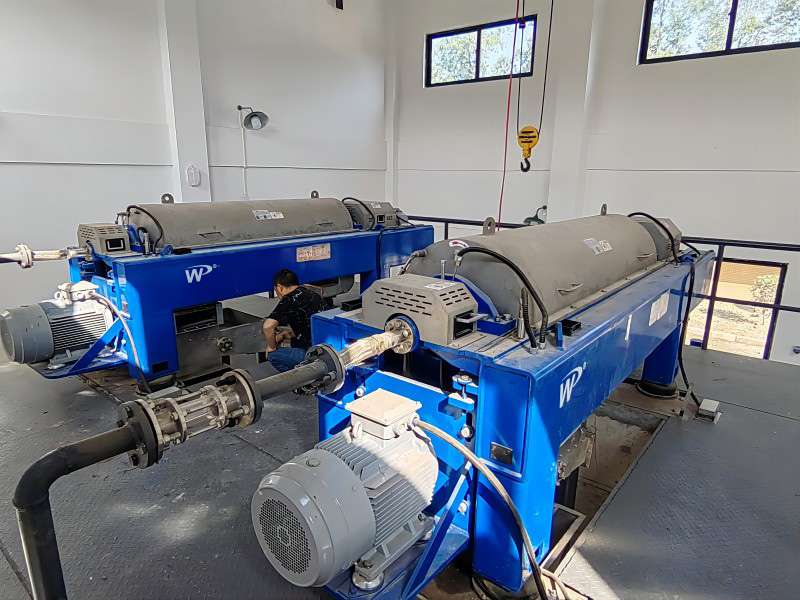
Two ZK LW430x1850C two-phase decanter centrifuges were installed for continuous distiller's grains dewatering.
View Installation

Tunnel Boring Slurry Dewatering
A skid-mounted system with two LW750x3200B two-phase decanter centrifuges was installed for tunnel boring slurry dewatering.
View InstallationRequest a 2-Phase Configuration Recommendation
Send the feed material, flow rate, feed solids and required split. ZK engineers will size the bowl and recommend the drive, materials and wear package.
2-Phase Decanter FAQs
These quick answers help determine whether a 2-phase decanter is the right separation equipment for your process.
It separates a feed mixture into one solid phase and one liquid phase. Typical goals include sludge dewatering, liquid clarification, solids recovery and slurry volume reduction.
Choose a 2-phase decanter when the target is solid-liquid separation. Choose a 3-phase decanter when the process must separate two immiscible liquids and solids, such as oil, water and solid residue.
Yes. For abrasive feeds, ZK can configure tungsten carbide tiles, ceramic liners, hardened discharge ports and suitable stainless steel grades to extend service life.