
Sludge Dewatering Decanter for Municipal and Industrial Applications
ZK’s sludge dewatering centrifuge is a 2-phase LW-series decanter sized for municipal sludge treatment, biosolids dewatering, industrial process sludge, and food-processing residues. Dual-VFD bowl and scroll control, pond-depth (weir) adjustment, and polymer conditioning are used to match feed DS%, target cake solids, and centrate TSS. Cake dewatering uses a shallower pond and more beach so solids leave stackable. Thickening and process-water duty use a deeper pond and lower G-force; see the wastewater decanter.

Core Design Features
Long-bowl geometry with adjustable pond depth (weir / dam plates) to trade centrate clarity against dry-beach length for thickening or dewatering duty.
Dual VFDs independently set bowl speed and scroll differential speed (Δn), so torque and residence time can follow changing feed solids.
Scroll flights and cake discharge ports protected with tungsten carbide tiles or duplex stainless steel (UNS S32205 / SAF 2205) for abrasive grit and industrial sludge.
PLC-controlled centrifuge polymer dosing (typically cationic PAM on municipal biosolids) to hold floc strength, cake solids, and solids capture as feed varies.
Scroll torque and vibration monitoring with configurable alarms and shutdown, used to protect the gearbox and avoid bowl plugging on sticky cake.
Centrifugal Separation Process
Sludge Conditioning
Feed sludge is flocculated with polymer (typically cationic PAM on municipal biosolids) ahead of the bowl. The flocculant bridges fines into shear-tolerant flocs, which improves settling under G-force and solids capture.
Centrifugal Separation
The rotating bowl generates high centrifugal force. Settleable solids compact against the bowl wall as cake; clarified liquid (centrate) forms the inner pond and overflows the weir discs.
Scroll Conveyance
The scroll conveyor runs at a controlled differential speed relative to the bowl, conveying compacted solids along the cylinder and up the conical beach for drainage.
Discharge
Dewatered cake leaves through carbide-protected discharge ports. Centrate exits over the weirs. Cake dryness vs. throughput is tuned by bowl speed, differential speed, pond depth, and polymer dose.

Sludge Thickening and Dewatering: Understanding the Difference
Sludge treatment typically involves two separate processes—thickening and dewatering. Thickening concentrates solids into a still-pumpable slurry. Dewatering removes more water to produce a stackable, conveyable cake for haulage, landfill, land application, or thermal treatment.
Sludge Thickening
Process Objective
Thickening concentrates dilute sludge into a higher-solids slurry while maintaining pumpable consistency. This step reduces hydraulic load and lowers downstream treatment volume.
Feed Characteristics
Commonly applied to primary sludge and waste activated sludge where solids content is relatively low.
Output Characteristics
Produces a flowable concentrated sludge suitable for biological treatment, digestion, or temporary storage.
Operating Behavior
Thickening equipment typically uses: Lower centrifugal force; deeper pond depth for more clarification volume; little or no polymer depending on sludge type; high hydraulic throughput with relatively short residence time.
Typical Applications
- Reducing digester loading
- Thickening WAS prior to biological treatment
- Pre-concentration before storage or transfer
Sludge Dewatering
Process Objective
Dewatering removes as much water as practical to produce a stackable cake. This cuts disposal volume and supports reuse, composting, land application, or thermal treatment.
Feed Characteristics
Treats sludge that has already undergone some concentration—such as digested sludge, industrial process sludge, food-processing residue, or mixed biosolids.
Output Characteristics
Produces a stackable, conveyable cake with substantially higher cake solids than thickened sludge.
Operating Behavior
Dewatering decanters—including ZK LW-series machines—typically use: Higher G-force for cake compaction; shallower pond depth to lengthen the dry beach; higher scroll torque for drier cake conveying; polymer conditioning (usually cationic PAM on municipal sludge) to protect capture rate.
Typical Applications
- Municipal digested sludge
- Industrial process sludge with moderate to high solids
- Food and beverage by-products
- Chemical, pharmaceutical, and general manufacturing sludge
- Any duty that needs a stackable cake for disposal or transport
Process Selection Guidelines
Choosing between thickening and dewatering depends on your treatment objectives:
Use Thickening When:
- Feed solids concentration is below 3% DS
- Downstream processing requires pumpable sludge
- Intermediate volume reduction is the goal
- Sludge will undergo further biological or chemical treatment
- Minimizing polymer consumption is a priority
Use Dewatering When:
- Sludge is prepared for final disposal or beneficial use
- Stackable, conveyable cake is required
- Disposal costs are based on volume or weight
- Transportation distance makes moisture content critical
- Downstream thermal treatment requires minimum moisture
Note: Many plants run two stages: thickening, then dewatering. That split often gives the lowest combined polymer, power, and disposal cost. Wastewater-plant thickening and process-water duty use the wastewater decanter; cake dewatering uses the LW machines below.
Decanter vs Belt Press, Screw Press and Filter Press
Cake solids, polymer dose and labour drive sludge OPEX. A decanter is usually selected when the plant needs continuous operation, higher cake DS%, and high dry-solids loading in a compact footprint. Detailed side-by-side notes are in decanter vs screw press and decanter vs filter press.
| Duty | Decanter centrifuge | Belt filter press | Screw / volute press | Chamber filter press |
|---|---|---|---|---|
| Typical municipal cake | 18–25% DS (WAS / digestate); primary often higher | Often 16–22% DS on similar WAS | Often wetter than a well-tuned decanter | Highest cake solids if batch cycle is acceptable |
| Operation | Continuous, enclosed | Continuous, open wash water | Continuous, low speed | Batch plates; more labour |
| Polymer | Cationic PAM; dose set by jar test / CST | Usually required; wash water recycle | Often higher dose for a strong floc | Depends on cycle and cake target |
| Best fit | High kg DS/h, variable industrial sludge, odour control | Existing belt halls; moderate DS% | Small plants, low noise, long-fiber sludge | Maximum dryness, batch acceptable |
Factors Affecting Separation Performance
Multiple variables influence centrifuge performance in sludge applications. Understanding these factors allows operators to optimize results and troubleshoot issues effectively.
Sludge Characteristics
Sludge Type and Origin
Municipal activated sludge (WAS): Fine, shear-sensitive biological floc. Cake solids are moderate when cationic polymer, mixing energy, and differential speed are set correctly. SRT / sludge age and CST strongly affect dewaterability.
Industrial sludge: Behaviour follows process chemistry. Metal-hydroxide precipitates often dewater well; oily or emulsified streams may need a 3-phase oily sludge decanter rather than a 2-phase LW machine.
Food processing sludge: High FOG and organics can reduce drainage. Temperature control and the right polymer chemistry matter more than bowl speed alone.
Feed Solids Concentration
Dewatering performance is influenced by the incoming solids concentration. Very dilute feeds increase hydraulic loading and reduce residence time, while excessively thick feeds may cause mixing challenges and uneven polymer distribution.
Particle Size Distribution
Sludge with a broader particle size distribution generally separates more efficiently. Very fine solids require effective polymer flocculation to achieve good capture, while coarse particles can increase wear on scroll surfaces.
Polymer Selection and Dosage
Polymer Type
Cationic polymers: Standard choice for municipal WAS, primary, and digested biosolids. Sludge particles are negatively charged; charge density and molecular weight are selected by jar test.
Anionic polymers: Used on some mineral, paper, or chemical precipitates, or as a dual-polymer aid—not the default for municipal biosolids.
Non-ionic polymers: Niche duty where charge interaction is weak or salinity interferes with ionic PAM.
Dosage Optimization
Polymer demand varies widely by sludge type and conditioning requirements. Underdosing leads to poor solids capture and high centrate turbidity, while overdosing wastes chemicals and can create an overly soft or slippery cake. Lab testing (e.g., CST, TTF) is recommended to determine optimal dosage.
Polymer Preparation
Proper polymer activation requires adequate dilution water quality, aging time, and mixing energy to fully develop polymer chains without causing shear degradation. Make-up concentration should be adjusted based on polymer chemistry and preparation equipment.
Operating Parameters
Bowl Speed (Centrifugal Force)
Higher bowl speeds generate stronger centrifugal forces, improving solids compaction and clarification. Increasing force can enhance cake dryness but also raises energy use and equipment wear. The optimal operating speed depends on sludge characteristics and process objectives.
Differential Speed
The speed difference between the bowl and the scroll determines how quickly solids are conveyed along the beach. Lower differential speeds increase residence time and may improve dryness, while higher differential speeds increase throughput at the expense of cake solids. Optimal settings vary by sludge type and desired performance.
Pond Depth (Weir Setting)
Adjustable weir discs (dam plates) set pond depth. A deep pond favours clarification / thickening; a shallow pond lengthens the dry beach for dewatering. Pond depth is one of the main commissioning levers, together with differential speed and polymer dose. See also polymer dosing for sludge dewatering.
Feed Rate
Feed rate must balance throughput against residence time. Overfeeding can reduce separation efficiency and increase suspended solids in the centrate, while underfeeding can reduce system stability. Feed settings are typically adjusted to accommodate variations in sludge consistency.
Environmental Factors
Temperature
Sludge temperature influences viscosity and polymer performance. Cold sludge increases viscosity and may require adjustments in feed rate or polymer dosing. Warm sludge can reduce polymer effectiveness and may increase odor potential. Maintaining a stable temperature range helps improve process stability.
pH and Chemical Environment
pH affects polymer charge interaction and floc formation. Most polymers perform best in a slightly acidic to neutral range. Extreme pH or high salt concentrations can interfere with polymer activity and may require adjustments to chemical conditioning.
Sludge Dewatering Centrifuge Specifications
ZK sizes LW-series 2-phase decanters for municipal and industrial sludge dewatering. Mechanical data below match the standard industrial series. Hydraulic figures are typical municipal ranges. Final selection uses feed DS%, dry-solids loading (kg DS/h), CST/TTF, and target cake solids / centrate TSS.
Feed Data and Dry-Solids Loading
Hydraulic flow alone does not size a sludge centrifuge. Convert the feed to kg DS/h, then check scroll torque, cake target and polymer demand against the selected bowl.
| Sizing input | Engineering basis | Worked example | Why it matters |
|---|---|---|---|
| Feed flow | Measured design and peak flow, m³/h | 10 m³/h | Sets hydraulic residence time and clarification area. |
| Feed solids | DS% by mass, with sludge density recorded | 2.0% DS at approximately 1,000 kg/m³ | Converts hydraulic flow into the solids load carried by the scroll. |
| Dry-solids load | kg DS/h = flow × density × DS fraction | 10 × 1,000 × 0.02 = 200 kg DS/h | Checks conveyor torque, differential speed and model capacity. |
| Target cake solids | Cake DS% required for handling or disposal | 22% DS municipal cake target | Guides pond depth, beach length, differential speed and polymer tuning. |
| Polymer basis | Active polymer kg/t DS, established by CST/TTF or jar test | At 6 kg/t DS: 200 × 6 ÷ 1,000 = 1.2 kg active/h | Sizes polymer make-up and dosing equipment. See the polymer dosing guide. |
| Model | Bowl speed (rpm) | Separation factor (×g) | Main motor (kW) | Scroll drive (kW) | Typical municipal capacity (m³/h) | Dimensions (mm) |
|---|---|---|---|---|---|---|
| LW350×1435 | 3500 | 2435 | 15–22 | 5.5 | 3–8 | 3750×1040×1350 |
| LW450×1845 | 3200 | 2580 | 30–37 | 7.5–11 | 6–15 | 4200×1140×1450 |
| LW520×2150 | 3000 | 2620 | 55–75 | 11–15 | 10–20 | 5050×1285×1550 |
| LW580×2400 | 2800 | 2546 | 75–90 | 15–18.5 | 15–25 | 5600×1400×1655 |
| LW650×2600 | 2600 | 2460 | 90–110 | 22–30 | 20–30 | 6000×1550×1800 |
* Hydraulic capacity is for typical municipal sludge. Viscous industrial sludge, dilute WAS, or a high cake-solids target can reduce throughput. Size on kg DS/h and confirm with a sample test or on-site trial. Full series tables: decanter centrifuge specifications.
Typical municipal operating envelope
Typical ranges for municipal biosolids. Cake solids move with sludge type, feed DS%, polymer, and commissioning.
| Sludge type | Typical feed | Typical cake | Solids capture | Polymer (indicative) |
|---|---|---|---|---|
| Primary sludge | 3–6% DS | 24–32% DS | ≥95% | Cationic PAM, often lower dose than WAS |
| Waste activated sludge (WAS) | 0.8–2% DS (or thickened 3–5%) | 18–22% DS | ≥95% | Cationic PAM; CST/TTF to set dose |
| Anaerobic digestate | 2–4% DS | 20–25% DS | ≥95% | Cationic PAM; dose often higher than primary |
| Chemical / hydroxide sludge | Process-dependent | Often >25% DS; some >40% DS | Feed-dependent | Charge selected by jar test; duplex bowl if corrosive |
Key Design Features That Improve Performance
ZK decanter centrifuge design incorporates specific mechanical features that directly impact separation efficiency, equipment longevity, and operating costs.
Adjustable Pond Depth (Weir / Dam Plates)
Design Feature: Removable weir discs (dam plates) at the large end of the bowl set pond depth. Changing weir height is done at a short stop—not while the bowl is at operating speed.
Performance Impact: A deep pond increases clarification volume (thickening / centrate quality). A shallow pond lengthens the dry beach and usually raises cake solids on dewatering duty.
Practical Benefit: The same LW bowl can be commissioned for thickening or dewatering by weir setting, differential speed, and polymer, instead of buying two machine types.
Variable Pitch Scroll Design
Design Feature: Scroll pitch gradually decreases along the conical beach section, creating greater conveying force as material approaches the discharge ports.
Performance Impact: Variable pitch maintains steady cake conveyance even as material becomes drier and more resistant to movement. This reduces the likelihood of cake buildup and maximizes drainage time. The final compression zone near the discharge ports further enhances solids compaction.
Practical Benefit: Improves cake handling stability, reduces torque fluctuations, and supports consistent dewatering performance compared with constant-pitch designs.
Optimized Feed Zone Design
Design Feature: Feed enters through a feed tube designed to gently accelerate slurry from atmospheric pressure to bowl speed. Internal baffles distribute incoming flow evenly around the bowl.
Performance Impact: Smooth acceleration prevents floc shearing and preserves polymer effectiveness. Even distribution minimizes localized overloading that can cause solids carryover. Reduced turbulence also improves component life and enhances clarification consistency.
Practical Benefit: Maintains stable performance across varying load conditions and reduces the risk of high suspended solids caused by improper feed introduction.
Specialized Discharge Port Geometry
Design Feature: Cake discharge ports feature optimized opening geometry and smooth surface transitions. Some models offer adjustable port sizes for different sludge consistencies.
Performance Impact: Proper port shaping prevents cake accumulation at the discharge, reducing plugging risk and limiting wear from abrasive solids. Port sizing influences residence time and final cake dryness.
Practical Benefit: Reduces unplanned shutdowns for port cleaning and allows operators to fine-tune dryness versus throughput without hardware changes.
Baffle Disc (BD Plate) for Soft Biosolids
Design Feature: Selected LW dewatering bowls can be fitted with a baffle disc (BD plate) in the beach zone. This is a 2-phase municipal option, not a 3-phase oil-water split.
Performance Impact: On compressible WAS or digestate, the disc can improve drainage through the beach when pond depth, differential speed, and polymer are matched to the feed.
Practical Benefit: Used to chase cake solids on difficult organic sludge. Oily sludge with a free oil phase is a 3-phase duty on the 3-phase decanter or oil-sludge centrifuge.
Energy-Efficient Drive System
Design Feature: Dual variable frequency drives independently control both the main bowl motor and the scroll drive. A shared DC bus allows energy exchange between drives during acceleration and deceleration.
Performance Impact: Independent speed control provides precise adjustment for different sludge conditions. Energy recovery during deceleration reduces net power demand, while soft-start capability minimizes inrush current and electrical stress.
Practical Benefit: Helps lower overall energy consumption and operating costs, particularly in high-throughput installations.
Wear-Resistant Materials and Coatings
Design Feature: Critical wear areas utilize tungsten carbide tiles or duplex stainless steel. Scroll flights and discharge zones receive wear-resistant coatings. The bowl interior can be lined with ceramic or carbide surfaces for severe applications.
Performance Impact: These materials significantly enhance durability in abrasive sludge environments such as mining, construction, or industrial waste streams. Duplex stainless steel provides a balanced combination of wear resistance, corrosion resistance, and toughness.
Practical Benefit: Extends service life, reduces maintenance frequency, and minimizes downtime in demanding applications.
Sludge Type Adaptability and Process Flexibility
ZK LW decanters are configured to the sludge, not run as a generic “universal” machine. Cake dewatering is 2-phase (cake + centrate). Thickening uses a different pond-depth and G-force set-point; oily feeds with a free oil phase go to an LWS 3-phase machine.
Municipal Wastewater Applications
Primary Sludge (Dewatering Stage): Primary sludge contains settleable solids and organic material that dewater readily when properly conditioned. Stable floc formation and gentle feed introduction help maintain consistent cake quality.
Waste Activated Sludge (WAS): Biological sludge is fine-particle and shear-sensitive, requiring careful polymer conditioning and controlled acceleration to maintain floc integrity. Dewatering typically benefits from higher torque capability and optimized scroll design.
Digested Sludge: Anaerobically or aerobically digested sludge is more homogeneous and often dewaters more efficiently. Proper chemical conditioning improves solids capture and produces a manageable cake suitable for downstream handling or disposal.
Industrial Process Sludge
Chemical Precipitation Sludge: Metal hydroxides and inorganic precipitates typically form dense solids that dewater effectively. Corrosive or abrasive materials may require upgraded metallurgy and wear-resistant protection.
Oily Sludge: Emulsified oil is still a 2-phase problem if there is no separate free-oil layer. A stable emulsion may need chemical breaking. True oil-water-solids splits use an LWS 3-phase oil-sludge centrifuge.
Paint and Coating Sludge: Sticky, viscous sludge requires robust scroll torque and optimized pitch to maintain reliable solids conveyance. Wear protection may be necessary due to pigments and fillers.
Pulp and Paper Sludge: Fiber changes drainage. Pond depth, feed-zone shear, and polymer type are set to the furnish; long fiber can wrap a scroll and may favour a press on some streams.
Food and Beverage Industry
Dairy Processing: High-fat organic sludge requires appropriate polymer chemistry and temperature control for stable dewatering. Hygienic design options support CIP cleaning where needed.
Brewery and Beverage: Spent yeast, trub, and fermentation residues can be processed in both thickening and dewatering stages, but ZK decanters target the dewatering phase, producing solids suitable for handling or disposal.
Meat Processing: Protein-rich sludge demands effective flocculation and stable torque output. Temperature consistency enhances separation efficiency and prevents material build-up.
Vegetable and Fruit Processing: Sludge characteristics vary with crop type. Fiber and pectin levels influence how the material drains, requiring flexible adjustments to polymer dosage and differential speed.
Construction and Mining Applications
Tunnel Boring and Piling Slurry: High sand and clay content generates abrasive wear, making tungsten carbide protection and reinforced components essential. Consistent dewatering reduces disposal volume and transportation requirements.
Mineral Processing Tailings: Tailings often contain fine particles and minerals that require strong conveying torque and proper polymer selection. Wear-resistant materials extend service life under continuous abrasive loading.
Dredging Spoils: Highly variable mixtures containing sand, silt, debris, and organic matter require adaptable operating parameters. Proper conditioning helps stabilize cake discharge for beneficial reuse or disposal.
Typical Applications for Sludge Centrifuge

Municipal Wastewater Plants
Ideal for primary and secondary sludge dewatering, reducing disposal costs and ensuring regulatory compliance.
Learn More →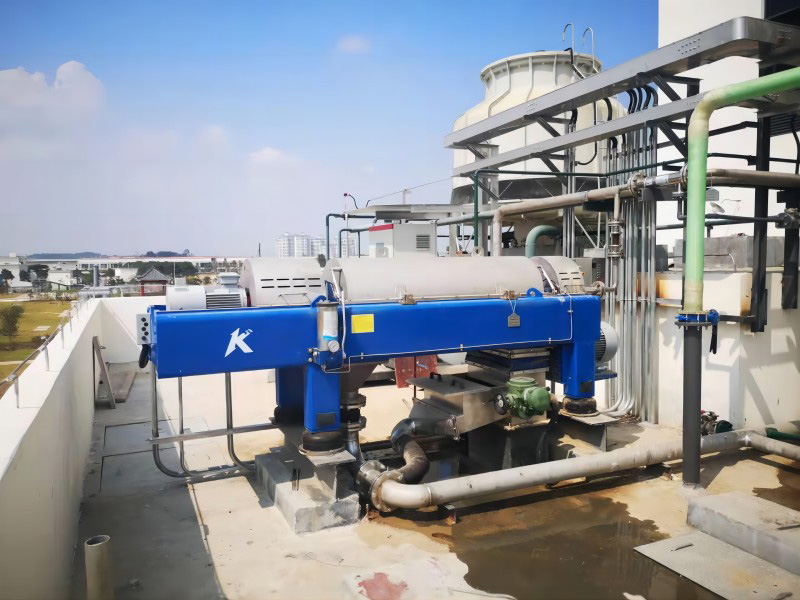
Industrial Manufacturing
Widely used in chemical, pharmaceutical, and food industries. Proven solutions for high-viscosity and abrasive sludges.
Learn More →
Construction & Infrastructure
Efficient dewatering of tunneling, piling, and drilling slurries, improving project efficiency and reducing environmental risk.
Learn More →Municipal and industrial installations
Municipal and industrial sludge lines commissioned on LW 2-phase decanters. Cake solids follow feed DS%, CST, polymer, and how the plant runs the machine.
Municipal Wastewater Treatment Plant
Application: Replace batch chamber filter presses with a continuous LW dewatering line.
Equipment: LW520×2150 2-phase decanter, dual VFD, PLC polymer dosing.
Feed: Anaerobic digestate, typically 2.5–3.5% DS.
Typical results: Cake 20–24% DS; solids capture ≥95%; cationic PAM dose set by jar test and torque control. Hydraulic rate kept inside the municipal LW520 envelope (about 10–20 m³/h on this sludge).
Plant outcome: Continuous duty removed filter-press batch downtime. One operator monitors the line. The client ranked uptime and labour above chasing maximum DS%.
Request a Quote
Chemical Manufacturing Facility
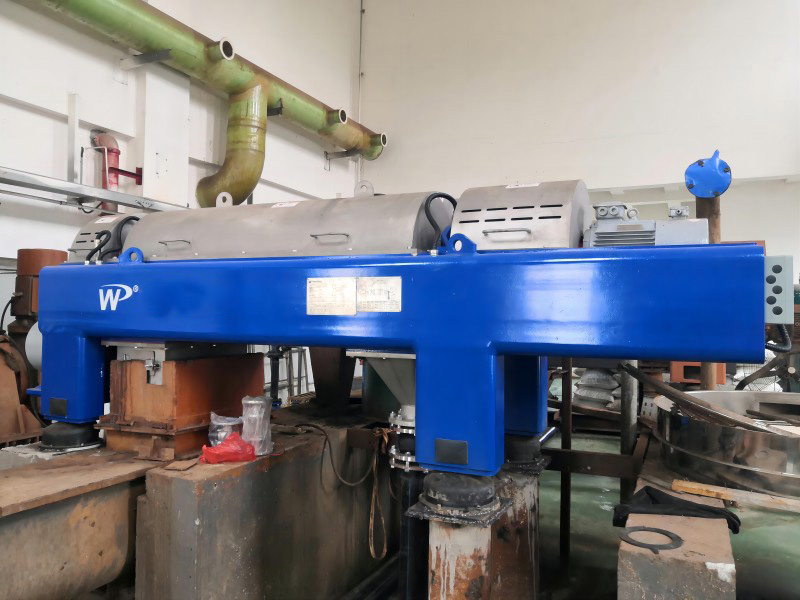
Application: Dewater mixed hydroxide precipitation sludge from specialty chemicals.
Equipment: LW450×1845, duplex (2205) wetted parts, automated dosing and torque control.
Feed: Mixed metal-hydroxide sludge; feed DS% varied with batch production.
Typical results: Cake generally 28–35% DS on this inorganic feed (higher than municipal WAS); capture held by polymer and differential speed rather than by raising bowl speed alone. Disposal volume fell with the drier, more consistent cake.
Plant outcome: More stable cake for skip handling, lower polymer swings after auto-dosing, and shorter payback from haulage and uptime.
Request a Quote-
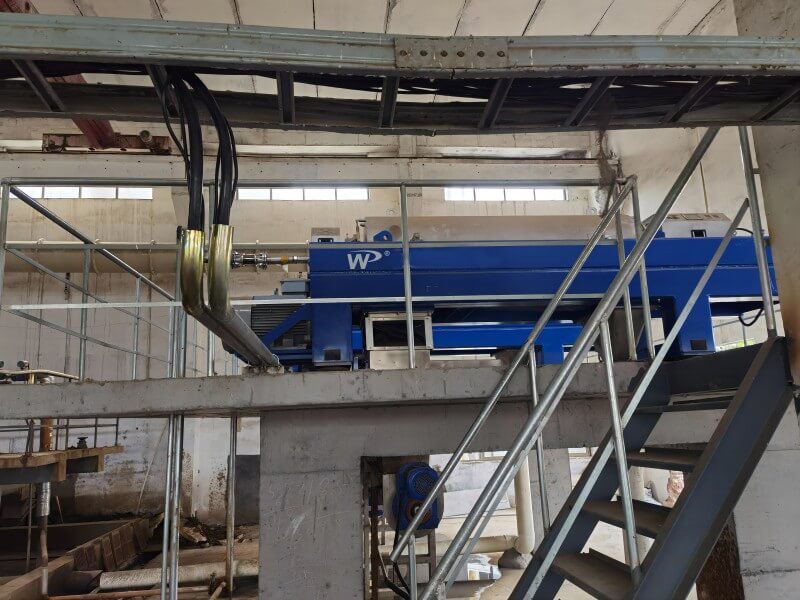 Municipal Sludge Dewatering
-
 Industrial Sludge Processing
-
Treatment Plant Upgrade
-
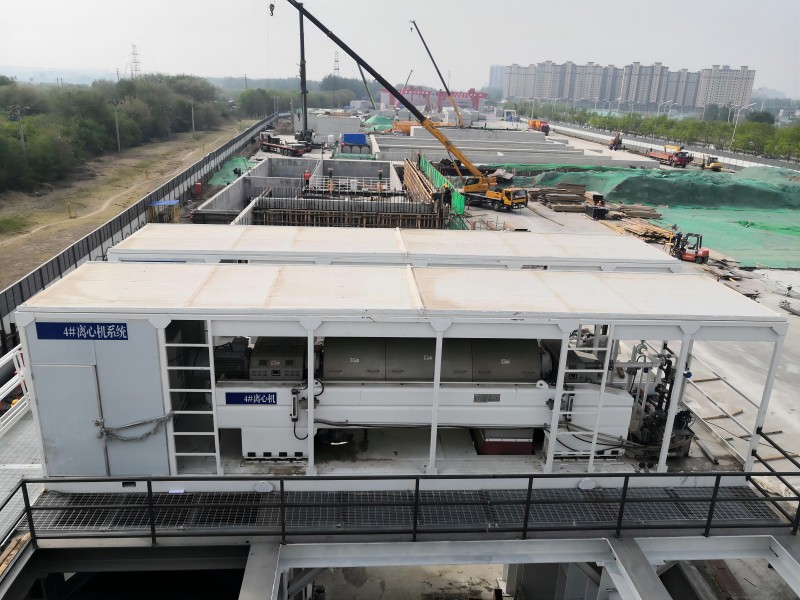 Construction Sludge Treatment
-
Chemical Industry Sludge
-
 Food Processing Sludge
Frequently Asked Questions About Sludge Dewatering
On typical municipal WAS or digestate, an LW decanter is commonly commissioned in the 18–25% DS cake range, with solids capture around 95% when cationic polymer and differential speed are set correctly. Primary sludge is often drier; some inorganic industrial cakes exceed 40% DS. Feed DS%, CST, and polymer dominate the result.
Municipal biosolids are usually conditioned with cationic PAM injected into the feed line so flocs form before the feed zone. The polymer neutralizes negative charge and bridges fines. Underdosing raises centrate TSS and cuts capture; overdosing wastes chemical and can make a slippery cake. Dose is set in kg/t DS from jar tests (CST/TTF) and trimmed on the machine. See the polymer dosing guide.
Thickening concentrates dilute sludge (for example ~0.5–1% DS WAS) to a still-pumpable slurry, often 3–8% DS, using a deeper pond and lower G-force. Dewatering takes already concentrated sludge to a stackable cake, typically 18–25%+ DS on municipal duty, with a shallower pond and more beach. Plant-level thickening and process-water separation use the wastewater decanter.
Yes. Dual VFDs plus PLC torque control watch scroll torque. When feed thickens, torque rises and the controller can raise differential speed to convey cake faster and avoid plugging. Bowl speed, pond depth, and polymer still need operator or recipe limits—torque control is not a substitute for a jar-tested polymer dose.
Daily: vibration, leaks, grease, and unusual noise. Wear parts: tungsten carbide tiles on scroll flights and discharge bushings, inspected on a grit-dependent interval. Main bearings are typically planned for replacement in the 12,000–20,000 hour band depending on load, grease, and balance—not a fixed 15,000 hour rule for every plant. Keep the feed zone and weirs free of ragging.
Power is dominated by bowl drive and sludge rheology, not by a single catalog kWh/t figure. On dual-VFD machines with a shared DC bus, scroll-drive regenerating energy can be returned to the bowl inverter, which cuts net kW during deceleration and some steady loads. Compare energy on a kWh per tonne DS basis after commissioning, against belt or screw-press alternatives on the same sludge.
About ZK SEPARATION
ZK SEPARATION manufactures LW 2-phase and LWS 3-phase decanter centrifuges. Sludge dewatering machines are built for municipal biosolids and industrial cake duty, with ISO 9001 quality management and CE marking for applicable European shipments.
-
Equipment Delivered Annually
400 -
Technical Patents
60 -
Application Sectors
20 -
International Clients
150
Need a Custom Sludge Dewatering Configuration?
Send feed DS%, target cake solids, hydraulic flow, and a sludge description. Process engineers will size on kg DS/h and, where needed, support a bench or on-site trial.