
Oil Sludge Three-Phase Separation Project for an Environmental Company
Three LWS650x2650B Three-Phase Decanters with One Dual-Drive Vertical Dryer in a Skid-Mounted Layout
Project Background
An environmental service company built an oil sludge treatment line around three LWS650x2650B three-phase decanter centrifuges and one dual-drive vertical dryer. The duty of the line is straightforward: separate oil, water, and solids from oily sludge continuously, then send the discharged solids to a secondary drying step.
For this type of project, the main challenge is not only separation itself but also how the equipment behaves when feed properties move around. Oily sludge can contain free oil, emulsified oil, water, sand, rust, and sticky fine solids. A practical line therefore needs stable three-phase separation at the decanter stage and a sensible follow-up route for the solid phase.
Customer Challenges
- Oil sludge feed can fluctuate in oil content, water content, and abrasive solids loading, so one fixed operating point is rarely enough
- Emulsified oil and fine solids make clean oil-water-solid splitting harder than ordinary two-phase sludge dewatering
- Wet solids discharged directly from the decanter can still be difficult to transfer, stockpile, or send to final disposal without a polishing step
- With three machines installed in parallel, piping layout, maintenance access, and operating platform design all affect day-to-day usability
- The project owner needed a line that supports continuous running while still leaving room for inspection, shutdown cleaning, and routine maintenance
ZK SEPARATION Solution
The project uses a three-machine decanter bank as the core separation section. Pretreated oil sludge is fed to the three-phase decanters, where oil, water, and solids are split in one continuous step. After the primary separation stage, the discharged solids can be routed to the dual-drive vertical dryer for further moisture reduction.
Process Role
In this arrangement, the three-phase decanter handles bulk separation and resource recovery. The oil phase is collected for downstream handling, the aqueous phase is sent to the next water treatment step, and the solid phase leaves the decanter continuously. The vertical dryer is not a replacement for the decanter; it works as a downstream solids-conditioning step to improve handling of the discharged cake.
Equipment Configuration
-
Three LWS650x2650B Three-Phase Decanters
Three decanters installed in parallel allow the project to distribute load, maintain output during service intervals, and adapt more easily to changing feed conditions.
-
Dual-Drive Vertical Dryer for Solid Phase
After decanter separation, the solids stream can be transferred to the vertical dryer to lower free moisture further and make downstream transport or disposal more manageable.
-
Skid-Mounted Outdoor Installation
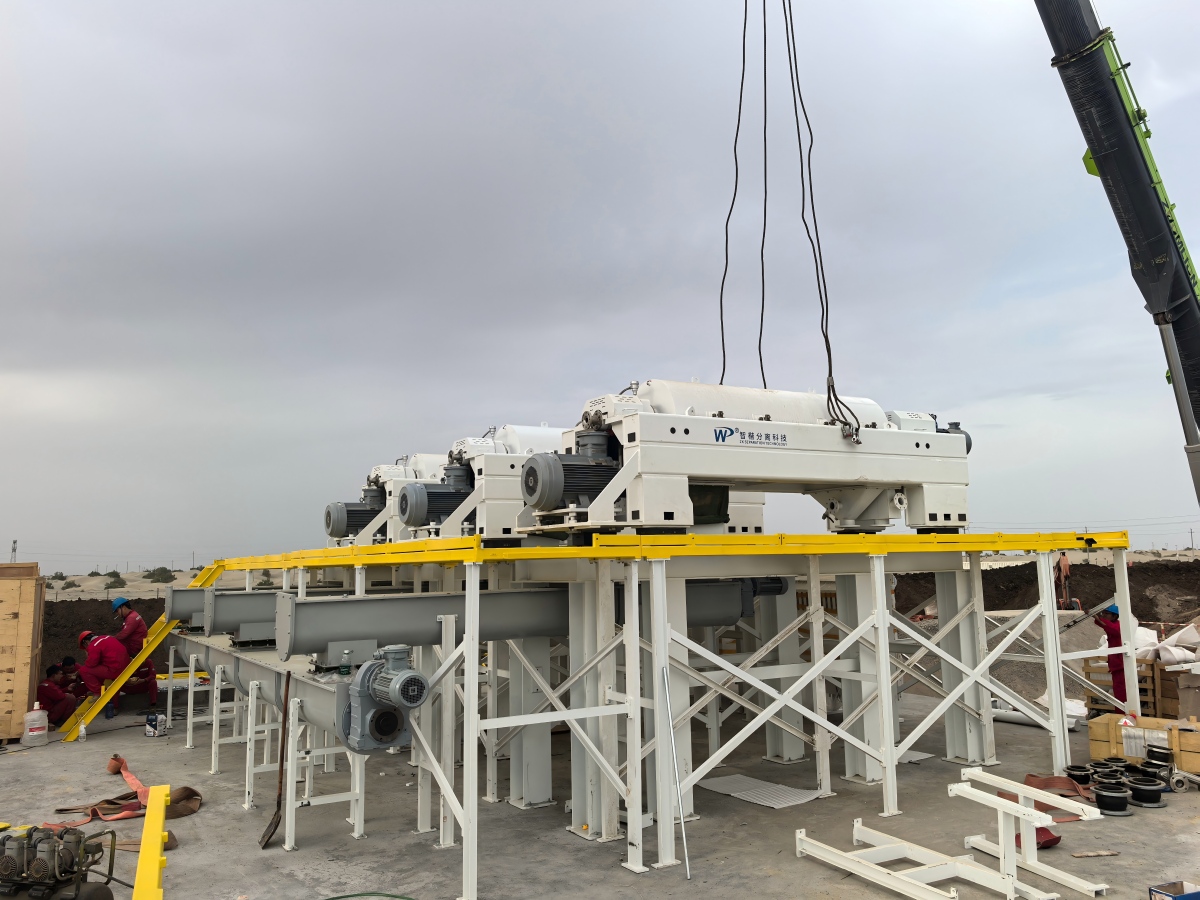
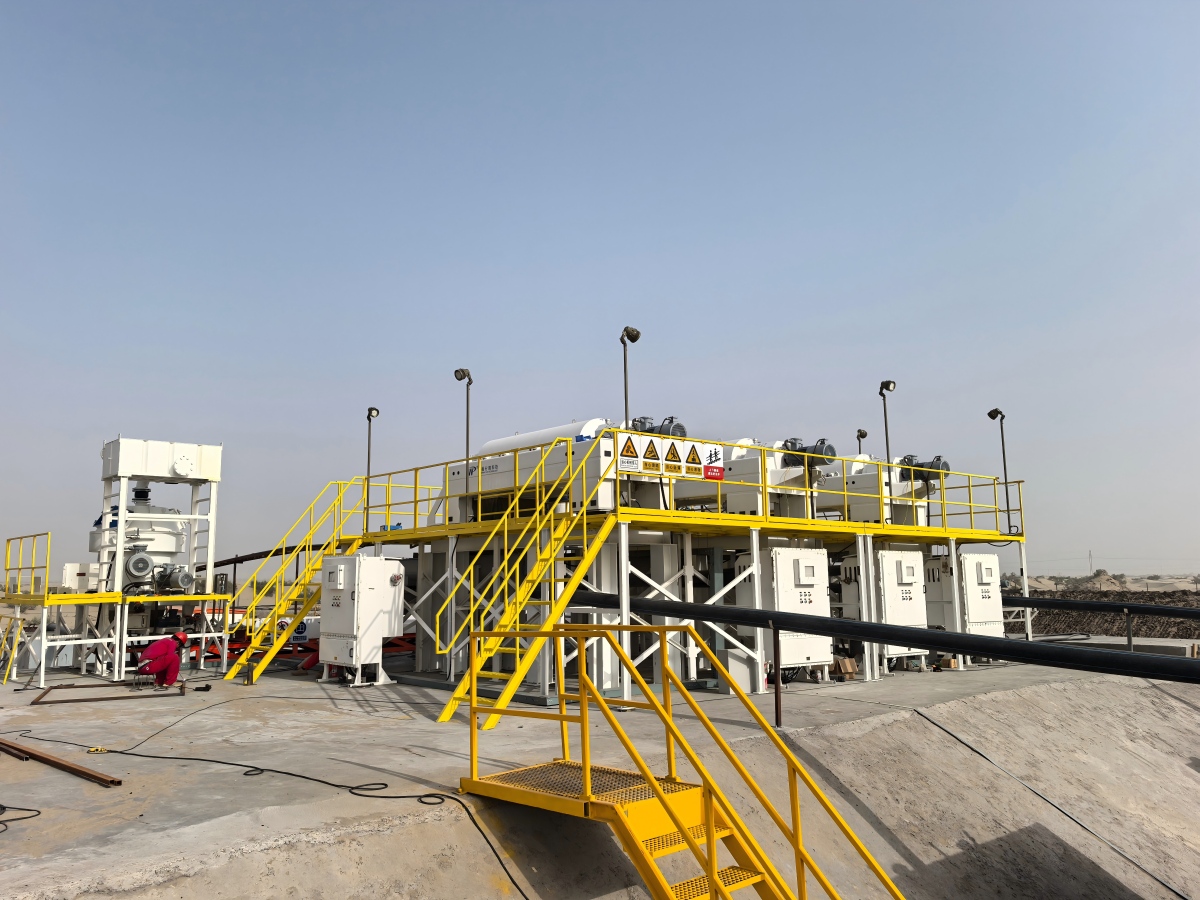
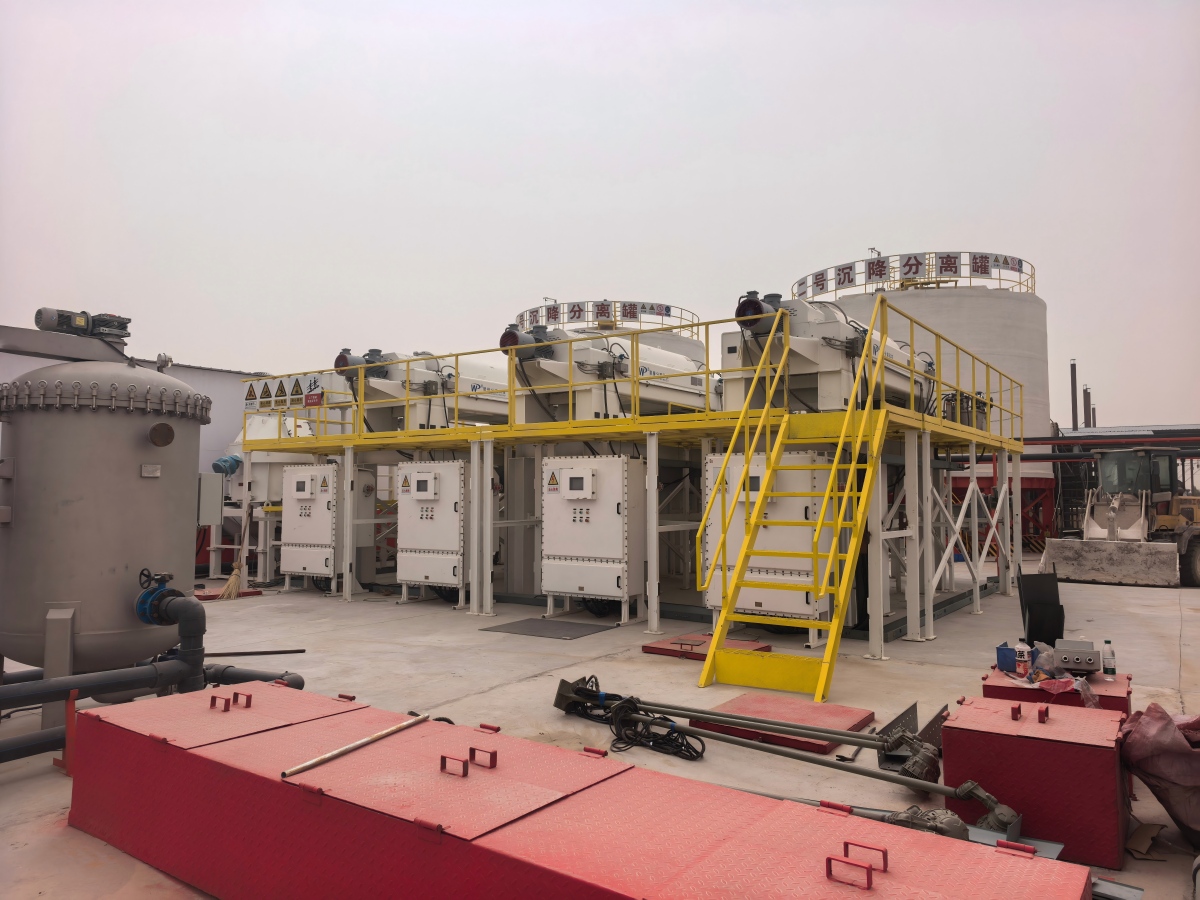
The elevated steel structure keeps the decanters, local cabinets, piping connections, and operator access in one integrated area, which is helpful for installation and routine inspection.
Project Overview
- Customer Industry Environmental Protection
- Application Oil Sludge Three-Phase Separation
- Feed Material Oily Sludge
- Core Equipment 3 x LWS650x2650B
- Auxiliary Equipment 1 x Dual-Drive Vertical Dryer
- Separation Duty Oil / Water / Solids
- System Layout Skid-Mounted Installation
- Operation Mode Continuous Primary Separation
- Reference Machine Class 650 mm Three-Phase Decanter
Installation Photos and Skid Layout
The site photos show the actual installation sequence and the final skid arrangement. The line combines three decanters on a shared platform, with the dual-drive vertical dryer positioned as a separate but connected unit in the solids-handling section.
Application Results
- Three-Phase Process Match: The installed line is configured to split oil, water, and solids continuously in the main decanter stage, which matches the basic process requirement of oily sludge treatment.
- Better Solids Handling Route: Pairing the decanters with a vertical dryer creates a more complete solids path than relying on decanter discharge alone.
- Parallel Operating Flexibility: Three decanters in parallel give the operator more room for load sharing, maintenance scheduling, and staged startup or shutdown.
- Practical Site Layout: The elevated platform keeps the equipment concentrated in one area and leaves clear access for inspection, cable routing, and piping maintenance.
- Suitable for Variable Feed: For oily sludge streams with changing phase ratios and solids content, this layout is more practical than a single-machine arrangement.
Why This Layout Fits Oily Sludge Treatment
Three-Phase Decanter as the Main Separation Step
Oily sludge treatment usually requires a front-end machine that can handle mixed oil, water, and solids without batch settling. A three-phase decanter is well suited to that duty because it performs continuous bulk separation and gives each phase a defined outlet path.
Vertical Dryer as a Downstream Solids Step
In many oily sludge projects, the decanter is selected for separation efficiency and line continuity, while the downstream dryer is selected for solids conditioning. That division of work is consistent with the way this project is built.
Reference Data for 650-Class Oil Sludge Decanter
The figures below are standard reference values from the existing oil sludge equipment range for 650-class three-phase decanters. They are shown for engineering review only and are not presented here as site acceptance figures for this project.
- Reference Bowl Speed: 2800 rpm
- Reference Separation Factor: 2854 G
- Reference Capacity Range: 20-30 m³/h per unit
Engineering Note
Actual throughput and phase quality in oil sludge service depend strongly on pretreatment condition, heating, chemical conditioning, solids size distribution, and the proportion of emulsified oil. For that reason, this page keeps its performance description tied to the installed process and avoids publishing unverified operating data.